
Sep 18, 2026
21 min read
Welcome to The Foundry, the new digital magazine from Brazen. We’re interested in extraordinary characters and the worlds they inhabit: their ambitions, their contradictions and the choices that change their lives. We’ll often publish their stories in parts, in the spirit of the old magazine serials. No fancy gadgets or video clips, just the story, presented as we’d like to read it.
We’re beginning with The Tell. All eleven chapters are free, and you don’t need to give us your email address to read them. If you’d like an excerpt and a link when the next instalment arrives, please subscribe. You’ll also hear about future Foundry projects, including a Vatican scandal and a nuclear history project with new discoveries.
We hope you enjoy it, and that you’ll stick around for what comes next.
More from Brazen: investigative reporting at Whale Hunting, long-form narrative podcasts at Brazen FM, and updates on Instagram.
Below are Chapters 1 and 2. Two more chapters will appear each day from Monday, 21 September, through Thursday, 24 September, followed by the final chapter on Friday, 25 September.
Chapter 1: The Unknown Player
By Bradley Hope
With editing from Brad Reagan
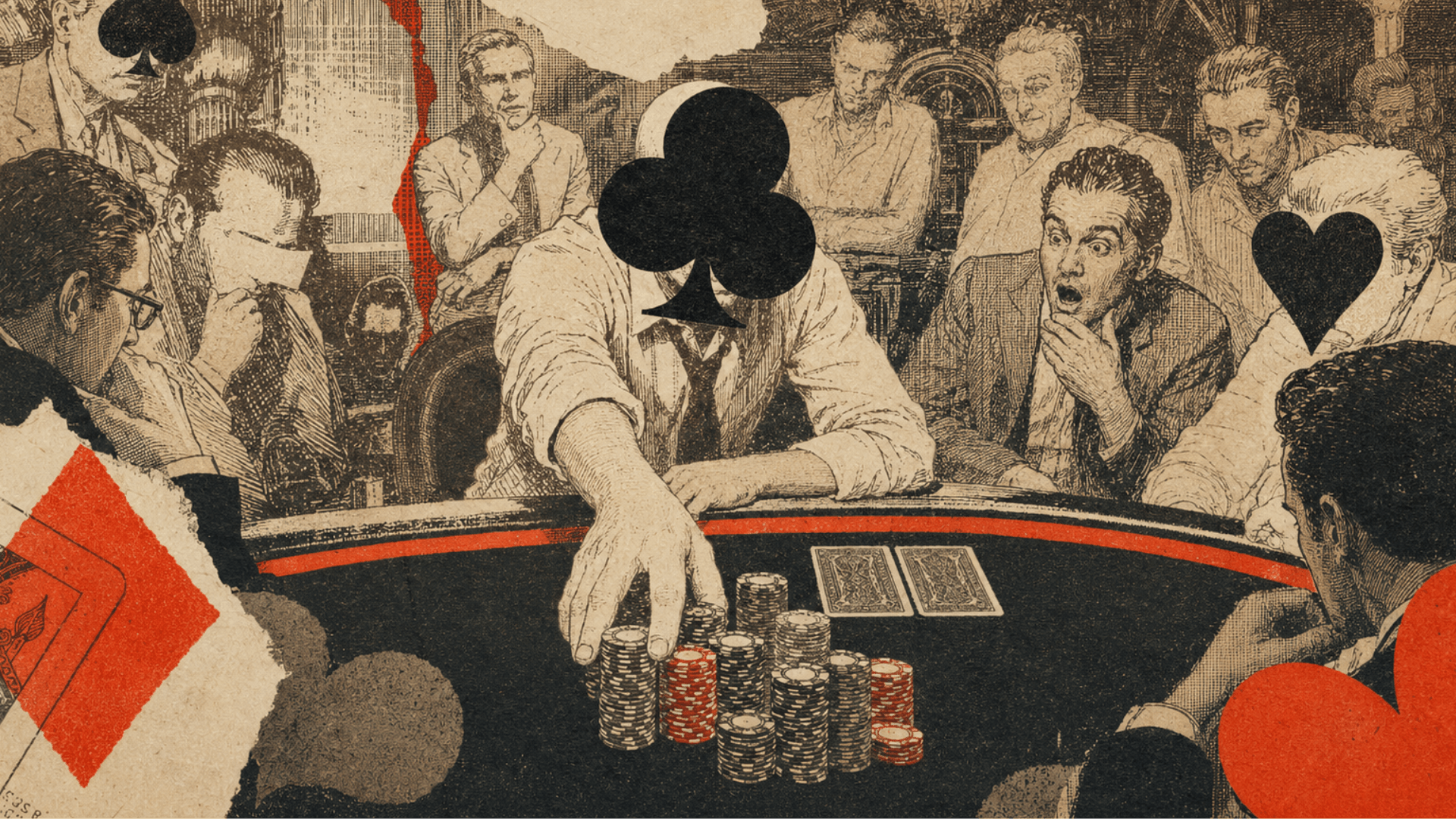
Thomas Goldstein did not look at his cards. He shoved his chips forward — all of them — and told the table, “Let’s find out together.”
This was the Bellagio poker room in July 2008, then the closest thing the gambling world had to a capital. The World Series of Poker was running across town at the Rio, and every high-stakes cash game in Las Vegas was heaving with professionals between tournament sessions, killing time. Goldstein looked like easy prey. He was not a professional or a known quantity. As far as anyone at the table could tell, he had no particular reason to be playing $25/$50 no-limit hold’em for pots worth many mortgage payments.
Happy surprises like this are the lifeblood of the poker economy: Some wild-eyed drunk wanders into the poker room after a heater at the craps table. Or a tech bro wants to show off for his entourage by taking on the poker stars he saw on ESPN. These amateurs are dead money and inevitably dust off their stacks in a matter of hours, leaving with rueful smiles and a story to tell their pals back home.
Goldstein cut an even less imposing figure. He was slight, pale, bald and bookish. He had the round face of a character actor Hollywood would typecast as an accountant or maybe a middle manager in a flyover-country office park. He was also mild-mannered and unfailingly polite. But Goldstein was doing more than holding his own. He was taking the table apart, and in a way almost no one had seen before.
Almost every hand, he raised pre-flop, before any of the shared cards were dealt, to $400 or $500. Most of the time, for one stretch an estimated 19 hands out of 20, he bet without looking at his cards. Then he would often bet every street, sometimes as much as $35,000 on the river, the final community card, before finally peeking at what he held. His opponents would call and then ask, bewildered, “What do you have?” He didn’t always know.
One player who sat down that night, moving into the main game with $28,000 a little after 11 p.m., called Goldstein’s raise with the queen and ten of diamonds and flopped a flush draw. Goldstein bet the flop. He bet the turn, when another diamond fell and made the player’s flush. On the river, a blank, he put the player all-in. The player thought about it as a crowd gathered, then called. Goldstein turned up the ace and jack of diamonds, a higher flush, and dragged a pot of about $56,000. It was the man’s first hand in the main game.
After buying in for $12,000, Goldstein built his stack to more than $100,000, watched it slip away, and built it back higher. He was unpredictable, aggressive and, as far as anyone at the table could tell, quite possibly crazy.
For his opponents, it was maddening. They were trying to work out what he held from his bets and the way he played. But a man who hadn’t looked at his cards could not be betting on their strength. The others couldn’t be sure he knew what he held, or cared.
Almost everybody in poker has a tell, a subconscious signal to the other players. The most common is acting weak with a strong hand, or strong with a weak one. But when Goldstein played without looking, he had no knowledge of his hand for his body language to betray.
A few railbirds, the spectators who cluster at the rail of big games, drifted over from adjacent tables. More followed, until people stood three deep behind the players. Johnny Chan, ten-time World Series of Poker bracelet winner, stood and watched. So did Greg Mueller, a towering former professional hockey player who made a lucrative transition to high-stakes poker. Professionals had left their own games to watch Goldstein. They made their living at poker and managed their bankrolls carefully; he was winning pots without even looking at his cards.
Players wanted a seat against him. For a stretch, Wynn and Rio chips were in play alongside Bellagio’s, until the floor guards noticed and immediately sorted it out. One player had emptied the last of his Las Vegas cash out of his pocket, five-thousand-dollar Wynn chips and thousand-dollar Rio chips, and Goldstein changed them out of the mountain of Bellagio chips in front of him. One onlooker paid a player $1,200 to sit in his seat for an hour, bought in for $97,000, and dropped more than $20,000 of it in that hour, most of that to Goldstein. The game had almost become a kind of live theater performance.
The setting was the casino’s high-limit section, which was set apart for the bigger games. On the main floor there was a table of players waiting for a seat in the main game. As players at the high-limit table fell away, new players would be transferred over.
The truly rarefied space was behind frosted glass, a place called Bobby’s Room, with a two-table enclosure where some of the largest games in the world were dealt. Nevada law required one of the doors to remain open at all times. The players at the $80/$160 tables outside could see shapes through the frosted glass but could not hear what was being said.
But on this night no one cared who was playing in Bobby’s Room. All the action was at Goldstein’s table. Goldstein kept shoving his chips onto the table without looking at his cards. Midnight passed, then 2 a.m., then 4 a.m. Players left and were replaced. The crowd thinned and thickened again as word spread through the casino of the legendary run of the mystery player. By the time the game finally broke, at a quarter to seven, the July sun was coming up over the desert and the Bellagio’s night shift was going home. Goldstein had been playing for more than eighteen hours. He left a winner; years later he would say the night had made him some $400,000.
A multi-page thread on the TwoPlusTwo poker forum, posted later that day under the title “Craziest Game — biggest pots of my life,” documented the session. Its author, posting as 88Orange, wrote that he had “never seen anyone play so recklessly and yet crush the game,” and that if you had to pick the king of insane poker maniacs from every player in the Bellagio poker room by appearance alone, “Tom might be your last pick.” He was, the poster added, “as nice and mild-mannered as people come.” Nobody at the table had known his name; the poster had to tell his readers to Google it.
That last part was more than a little curious. The Bellagio during the World Series of Poker season is a tiny world. Everyone knows everyone. The pros know the amateurs, the amateurs know the railbirds standing along the edge only to watch, the railbirds know the latest online buzz about anyone making waves, whether in Vegas or beyond. In the world of casinos, reputations travel fast. And yet a man had walked into the most important poker room in the country during the busiest month of the year, played for eighteen hours, swung hundreds of thousands of dollars in front of a crowd, and walked out almost completely anonymous despite being the most conspicuous person in the building.
The madman who played like he had nothing to lose had more to lose than anyone in the building.
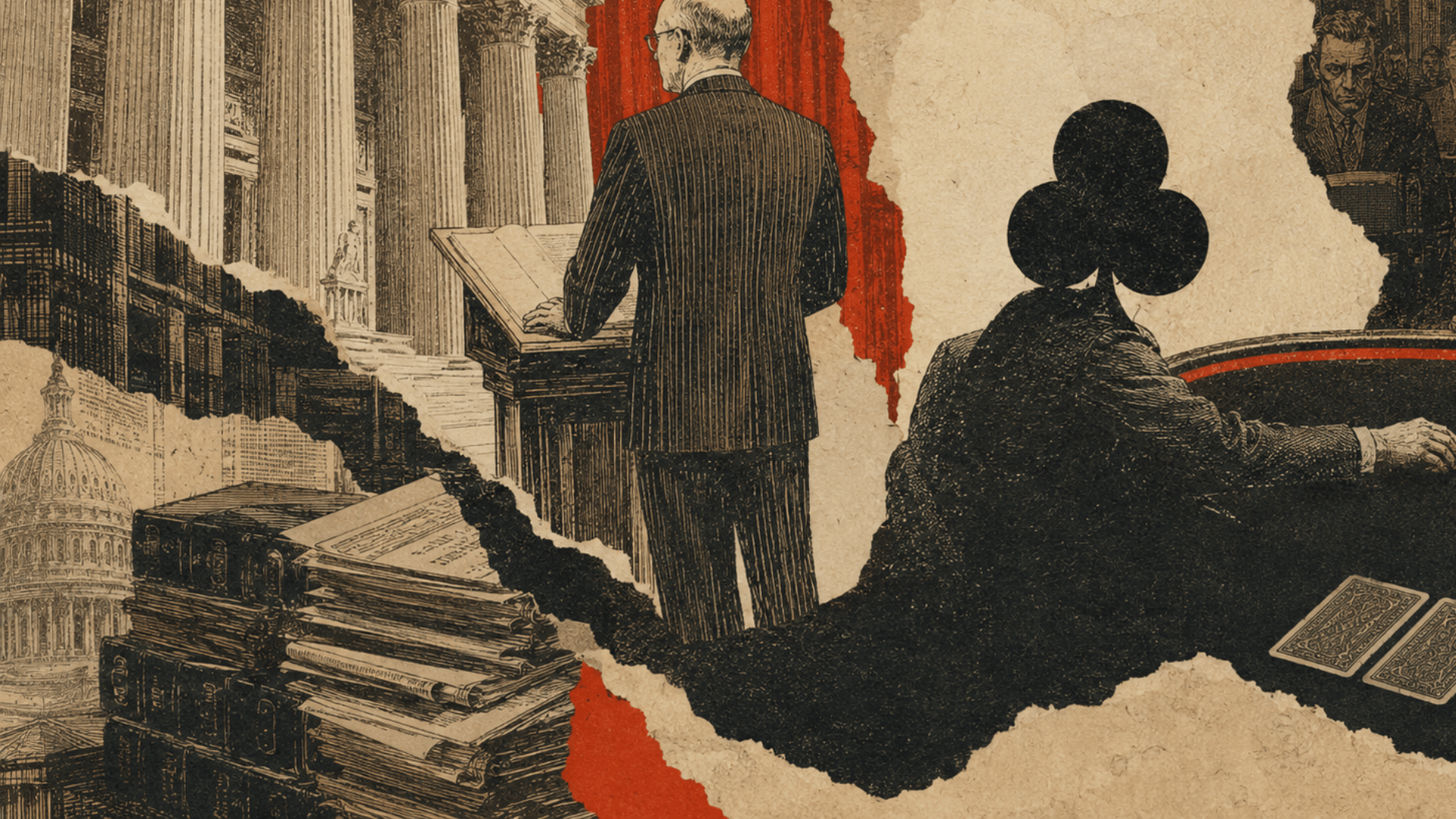
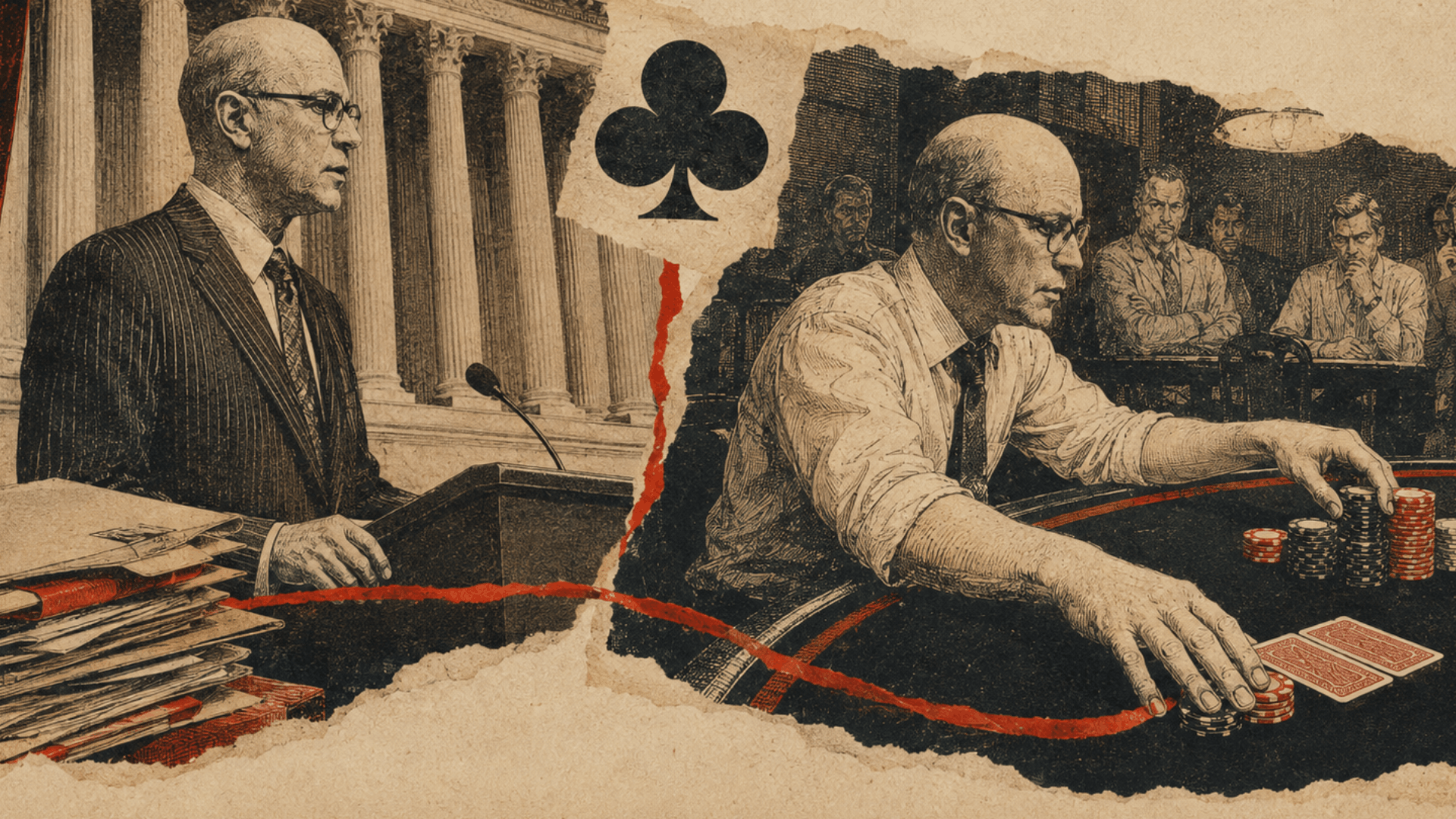
At home in Washington, D.C., Goldstein was known as one of the most accomplished lawyers in the country, with a narrow but high-profile specialty: the Supreme Court. He had argued before the nine justices more times than all but a handful of lawyers in private practice. With his wife, herself an accomplished attorney, he founded a blog that became the definitive source for Supreme Court news. Harvard and Stanford put him on their faculties. The White House sought his advice on judicial nominations. GQ had named him one of the 50 most powerful people in Washington. The New Republic had gone so far as to call the Supreme Court “the Goldstein Court.” He was, by the standards of the legal profession, a person of almost absurd distinction.
Behind his accomplishments was a brazen self-confidence and a willingness to bet on himself. On that July night in 2008, Goldstein tested those qualities in a high-stakes poker match for the first time against some of the world’s most formidable players. He left Vegas with his suspicions confirmed: You didn’t have to be the best player at the table. You just had to be willing to bet everything you could possibly afford to lose, and sometimes more.
* * *
In February 2026, Tom Goldstein took the stand in a federal courtroom roughly 15 miles and a world away from the Supreme Court. There was no marble, velvet curtain, or gallery of clerks and journalists jockeying for seats in mahogany pews. The Greenbelt, Maryland, courthouse was functional federal architecture: fluorescent lights, low ceilings, rooms designed for efficiency, not ceremony. But it was where Goldstein made the argument for his life.
The government was trying him on 16 counts: tax evasion, aiding in the filing of false returns, willful failure to pay, and making false statements on loan applications. If convicted, he faced years in prison.
He started by explaining that he always saw himself as an outsider, with little choice but to hustle for everything he wanted. To him, pedigree was just another hurdle to overcome.
“The people who did what I did as a Supreme Court lawyer tend to be very, very fancy lawyers,” Goldstein testified. “They clerked for the Supreme Court. They worked in the Solicitor General’s Office. They went to elite law schools.”
He paused.
“I did none of those things.”
Goldstein spoke in the calm, confident manner he had used hundreds of times before, in courtrooms where he had built a career on reading the room and controlling the narrative. Now he was trying to convince twelve jurors to spare him from prison.
Goldstein told his version of the story the government had spent weeks laying out, narrating how in the years that followed his epic session at the Bellagio he became obsessed with high-stakes poker and finagled his way into games with billionaires and A-list celebrities with millions of dollars trading hands in each session. He explained how he convinced himself he could beat the poker establishment the same way he beat the legal establishment, with chutzpah, hustle and painstaking preparation. Goldstein got so deep that he constructed a double life, in which he regularly gambled for nosebleed stakes, while still maintaining a thriving Supreme Court practice litigating some of the country’s most consequential cases. It involved private poker matches on three continents against some of the world’s richest men, seven-figure IOUs settled with a handshake and secret apartments rented for six figures just to stay close to the action. Goldstein testified that he had not wanted his wife to know the scope of his gambling debts.
Goldstein accepted responsibility for the tax-return errors but said that was different from having committed a crime.
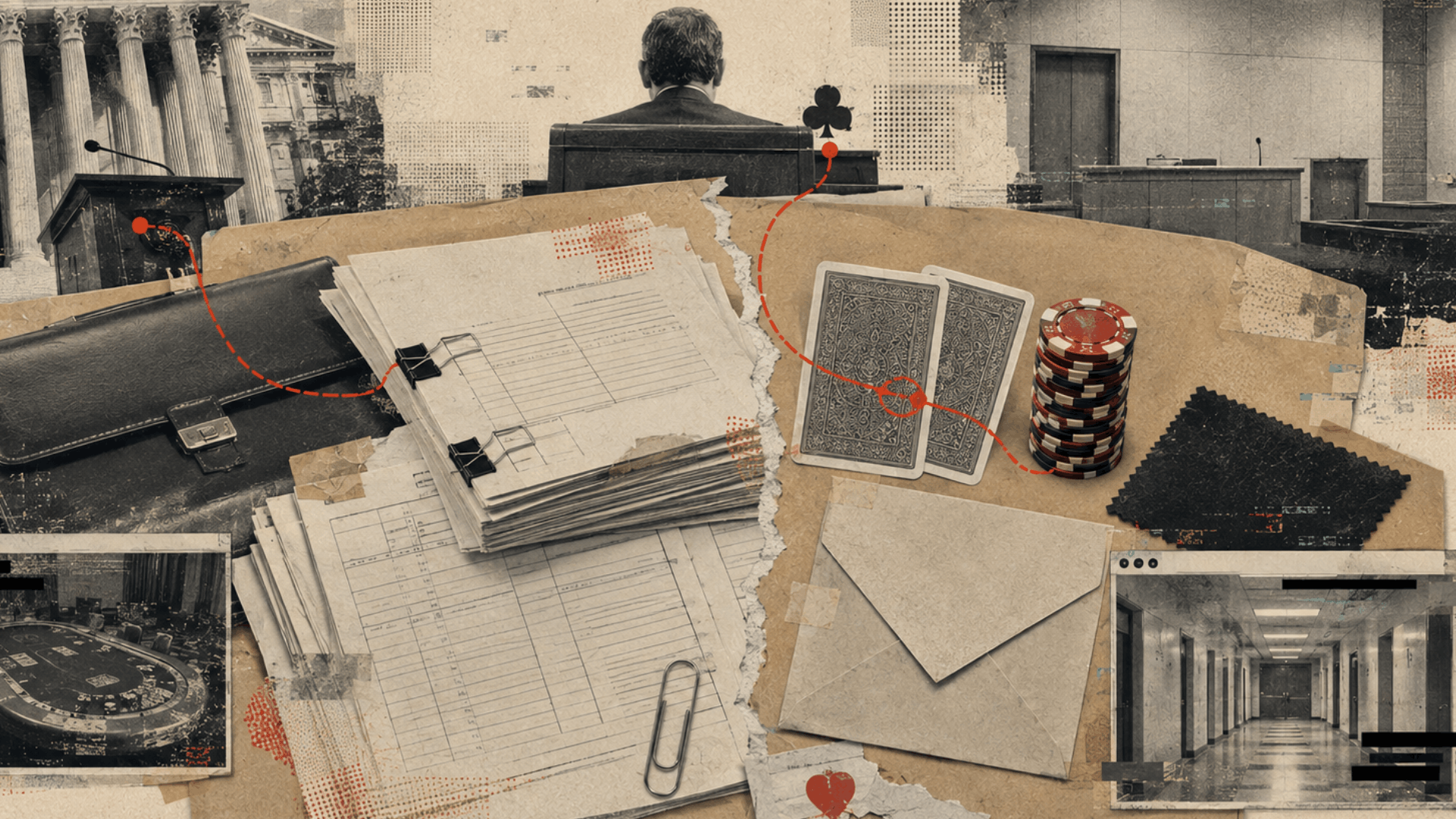
Weeks earlier, in his opening statement, Justice Department tax prosecutor Hayter Whitman had drawn the same contrast in colder terms. “Mr. Goldstein was a lawyer,” Whitman told the jury. “He was not just any lawyer, he was a Supreme Court lawyer. He taught at Harvard Law School, taught students from Harvard Law School. He owned his own law firm in Bethesda, Maryland, and he was making millions of dollars just doing that. But you will hear the evidence in this case that Mr. Goldstein wanted more than that.”
The lawyer who could argue any side of anything, Whitman said, had wanted the high-roller lifestyle enough to hide $15 million in poker debts from his own mortgage lenders. “I’m here to tell you, this case is simple. This case is about Mr. Goldstein’s choices and his deception.”
Chapter 2: The Outsider
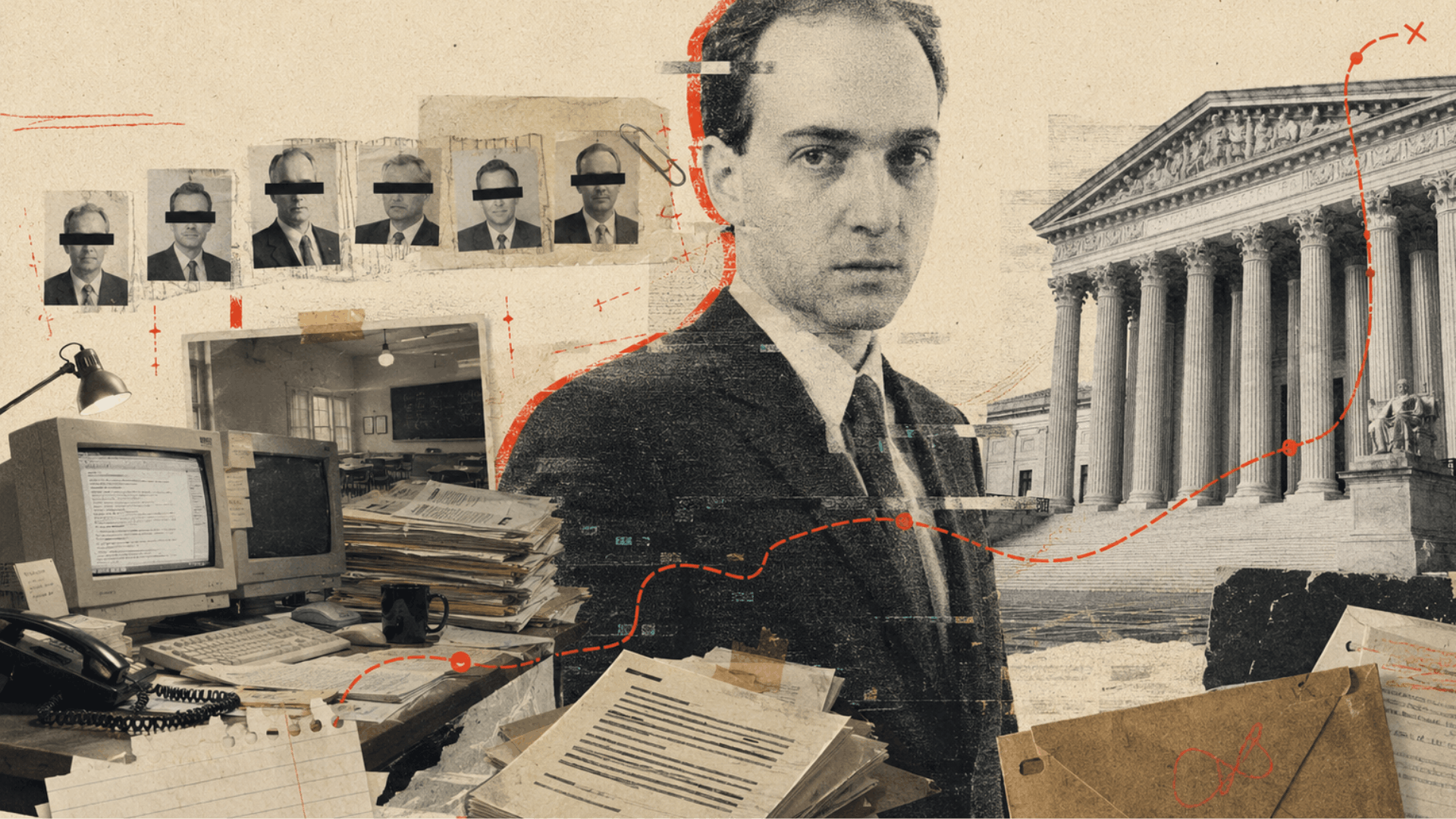
Tom Goldstein was born in Princeton in 1970 to a doctor and a lawyer who’d named him Thomas Che and split when he was young. He moved between New Jersey, South Carolina, and Florida until high school settled him in Irmo, South Carolina, a former farm town turned Columbia bedroom community, a place of fresh asphalt, chain restaurants and Friday-night football. Goldstein joined the debate team.
During senior year at the state championship round, his opening argument hit so hard his opponents cried mid-debate. A teammate watched him afterward: no reaction, just moving to the next point. At UNC Chapel Hill he became one of the country’s top debaters. His coach, Cori Dauber, told the alumni magazine she’d never seen more raw talent. “He’s going to beat you through hours of hard work and by thinking, finding a strategic way to get at you. Watch for the knife in his hand.” She noticed a technique no other debater used: mid-round, Goldstein would stop the rapid-fire delivery, approach the judge, drop his voice. “Now listen, here’s how I see it.” The judge would lean in. He could read hesitation in an opponent’s face and convert it to leverage. He made people see what he wanted them to see.
His girlfriend Amy Howe was also a political science major, and a debater. She graduated with highest honors. He borrowed her notes. Senior year they both took Introduction to Sociology. While he attended sporadically, making a few sharp comments, and using her notes for the exam, she got an A-minus. He got an A. The dynamic stuck: Howe did things the old-fashioned way with hard work; Goldstein parachuted in for the win.
They both interned for Nina Totenberg at NPR covering the Supreme Court. Goldstein interned first; Howe followed while studying for the bar, and the veteran correspondent became a mentor to them both. He called Totenberg “my adopted mother.” He and Howe married in 1994 and named their first daughter Nina.
Howe went to Georgetown for Arab studies, then Georgetown Law, where she was executive editor of the law journal. Goldstein’s grades were middling. An administrative error with his LSAT mailing left him with zero acceptances. His stepmother’s cousin taught as an adjunct at American University in Washington. The cousin walked into admissions: “This is my favorite cousin, Tommy, and I think he’d be a really good law student.” They admitted him to the evening program. He later transferred to day and graduated summa cum laude in 1995. But his degree came from a solid school that fed the middle tier of the profession. It was anything but a golden ticket to the Supreme Court.
Harvard, Yale, Columbia, and the University of Chicago alone accounted for roughly a third of the Supreme Court’s inner circle of regular advocates, according to a 1993 study. You went to one of those schools, or maybe one of the other Ivies, then clerked for a justice, spent a few years in the Solicitor General’s Office arguing cases on behalf of the federal government, and eventually joined a firm that would let you keep doing it for big bucks. American University, ranked 98th nationally, was not on the map. Years later, at a recruiting dinner in Harvard Square, a lawyer from the blue-chip firm Akin Gump asked Goldstein where he had gone to school, as Noam Scheiber reported in a 2006 profile of Goldstein for the New Republic.
“American,” Goldstein replied.
“Where?” the lawyer asked.
“American.”
The lawyer squinted. “Wow. I’m having trouble hearing here,” he said, almost literally unable to process the thought that someone as accomplished as Goldstein had come from such a down-market university.
It was the kind of reaction that for years provided fuel for Goldstein.
* * *
Even as a student, Goldstein was in love with the Supreme Court, an ardor that intensified after working for Totenberg. He studied the justices’ voting patterns and tendencies, looking for an angle or an opening. After law school, he clerked for Judge Patricia Wald on the D.C. Circuit, then joined Jones Day, where he discovered something that would reorder his life: circuit splits. The U.S. has thirteen federal appeals courts, spread across the country, and they sometimes reach opposite conclusions about the same law. The same regulation might be valid in the Fifth Circuit and unconstitutional in the Ninth; the same criminal statute might mean different things in Chicago and Atlanta. Resolving such disagreements is part of the Supreme Court’s job, and the justices are far more likely to take a case when lower courts have reached conflicting conclusions. Most lawyers at big firms knew this. Goldstein was the first to systematically mine it.
He built a system of roughly 300 search terms that he ran through Westlaw and LexisNexis to surface these conflicts, then cold-called the lawyers on the losing side and offered to handle the Supreme Court petition. Sometimes he’d do it for free or a reduced fee, but it was always with the understanding that if the Court took the case, he would argue it in the most august courtroom in America in front of a crowd.
In 1998, one of Goldstein’s calls was to Teresa Cunningham, a Kentucky attorney with a case he believed had Supreme Court potential. Washingtonian magazine, which interviewed Cunningham, reported that Goldstein told her he was starting a Supreme Court practice and put her case’s chances of reaching the court at 70 percent. She was shocked by the call but took a chance.
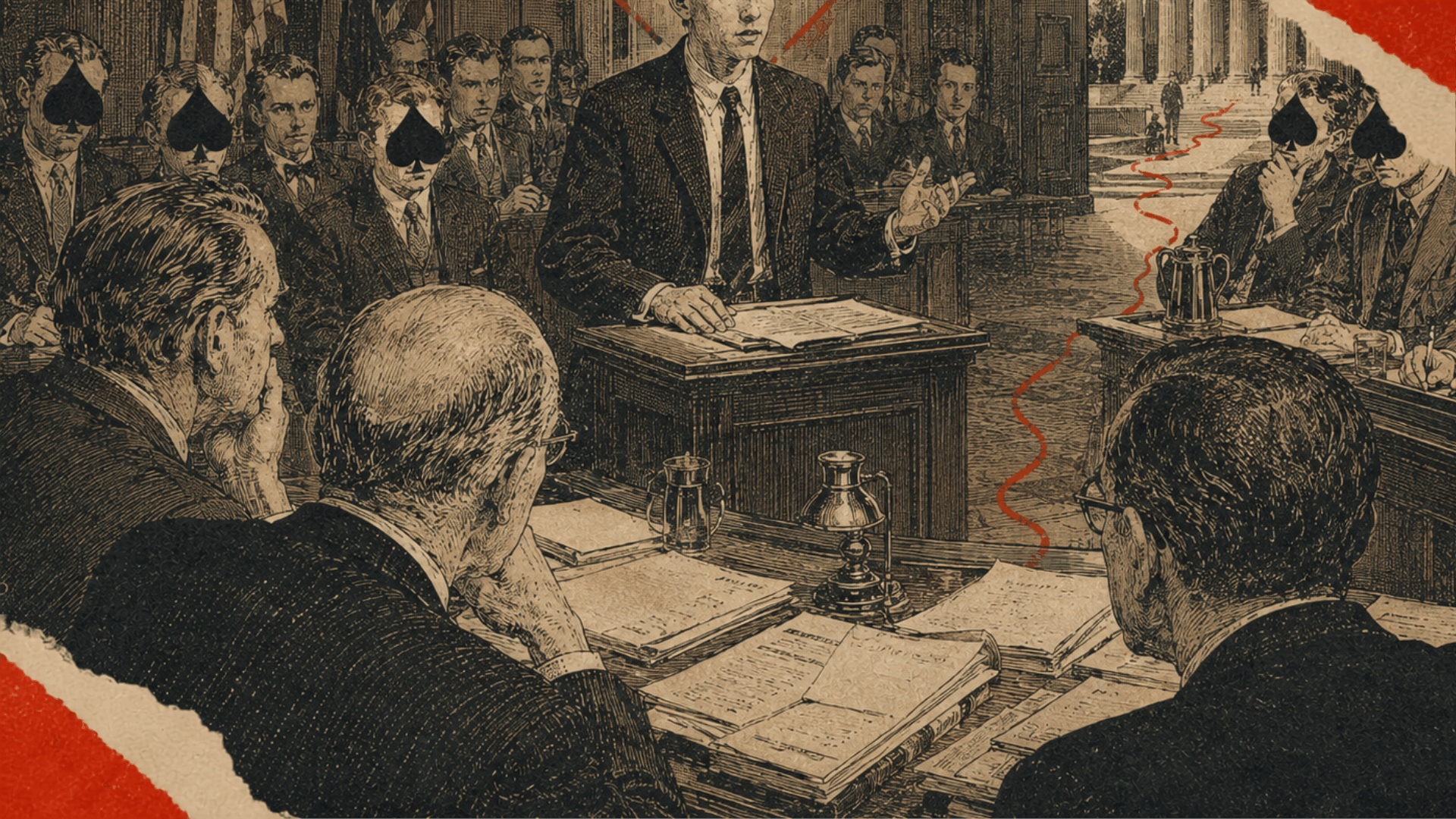
On April 19, 1999, at 28, Goldstein stood before the nine justices for the first time, to argue Cunningham v. Hamilton County. The question was procedural: whether a sanctions order against an attorney could be appealed immediately. The Supreme Court lectern is close enough to the raised mahogany bench that, as one advocate told Washingtonian, “if the Chief Justice were to reach out and you were to reach out, you can just about touch fingertips.” The justices file in past red velvet curtains. The advocate stands before them, alone in the marbled chamber. One lawyer remembered looking down at his hand in the Court’s cafeteria beforehand and watching it shake.
This was the first case Goldstein had ever argued in any court. He got forty-one seconds into it before the Chief Justice cut in. “But there are exceptions to that rule, are there not, Mr. Goldstein?” Rehnquist asked. Ginsburg came next, then Scalia, who said he was “sort of perplexed” by the position and did not “see why, conceptually, that makes any sense.” Breyer wanted to know why the Court should make the question “so complicated” when a single clear rule was available, and added that under that rule, “you’d lose.” When Ginsburg offered him a way to concede the point, Goldstein answered, “Respectfully, no,” and kept going. In rebuttal, with four minutes left, Rehnquist asked him to name a case from the Court that supported his argument, and when Goldstein could not, the Chief Justice answered for him. “The answer’s yes, but I can’t give it to you,” Rehnquist said, to laughter. “Imagine that as an exam answer.”
Cunningham, watching from the gallery, thought her lawyer was “a cool cucumber” even as the justices picked him apart. Eight weeks later the Court ruled against him unanimously, 9–0. “We got destroyed,” he would say later, narrating the defeat with self-mockery. He kept coming back.
It was Supreme Court practice as a business model, and nobody had thought of it quite that way before. He told the New Republic he could fix what he called “diseconomies in the system.” John Roberts, the future Supreme Court chief justice then still in private practice, was among the legal blue bloods dismissive of the concept. “If I’m going to have heart-bypass surgery, I wouldn’t go to the surgeon who calls me up,” Roberts told the American Lawyer.
When Jones Day refused to let Goldstein argue a case he had found and developed, he quit, moved briefly to another firm, and then quit again. In 1999, he and Howe launched Goldstein & Howe from the laundry room of their home. She worked a full-time law job to pay the bills while he took on uncompensated cases to build their Supreme Court practice. They were a natural team, with Totenberg later describing Howe as “the leveler,” the ethical compass who kept Goldstein grounded and reminded him that his cases involved real people.
By 2006, when Scheiber visited, the firm occupied a third floor Goldstein had added to his house in Washington’s A.U. Park neighborhood. The office required a walk up two flights of stairs to reach a single large room, maybe 40 feet by 25, that doubled as a lobby and conference room. Goldstein and three colleagues shared the space. His base was a workstation in the southeast corner, a war room in miniature with two oversized flat-screen monitors and a desk covered in electronic gadgets.
He represented death row inmates and took civil rights cases that nobody else wanted, for clients who could not pay, and did them well enough that the next client would somehow appear. For someone from American University to simply announce, “Look, I’m going to do this, I’m going to build this practice,” was, as he put it, “kind of a new thing.” By his early thirties he was arguing before the justices regularly.
“I guess I was just more willing to put myself out there,” Goldstein told the jury years later, adding that “kind of one built on another.”
Totenberg, who followed the Court closely, watched approvingly as he refined his approach. In the early years, he was a bit “snotty” and “brash,” she told the Carolina Alumni Review in 2017. He “talked too fast” and “had a little bit of an attitude.” That changed, she said, as he grew more comfortable at the Court. He became a better lawyer and, she thought, a better person. “When somebody is as smart as he is, there’s always the chance he will lose that sense of personal decency and become completely obsessed with himself,” Totenberg said. “And that didn’t happen to him. I give him a lot of credit for that. I give her even more.” She meant Howe.
Goldstein stood out as a calm presence in a chamber where nerves were on public display. A legal friend of thirty years described that manner to New York magazine, which published his account after the verdict in February 2026. “Tom is a very calm guy, and that plays great at the Supreme Court and with other lawyers,” he said. “You see the logic of his arguments. He doesn’t yell and scream.” Before oral arguments, he would check into a D.C. hotel suite for two days.
During the stay described by the Carolina Alumni Review, Howe planned to bring their daughters over for dinner. He held three moot courts starting ten days out. He argued without notes at the lectern, a choice that eliminated what he considered a crutch and projected a confidence that made the justices lean forward. His theory of oral argument was simple. The justices are making points rather than asking questions, and they are not looking for a fight; his job was to accept the premise of every point and then explain why he still won. The fireside-chat approach that he had developed while debating in college had followed him to the highest court in the country.
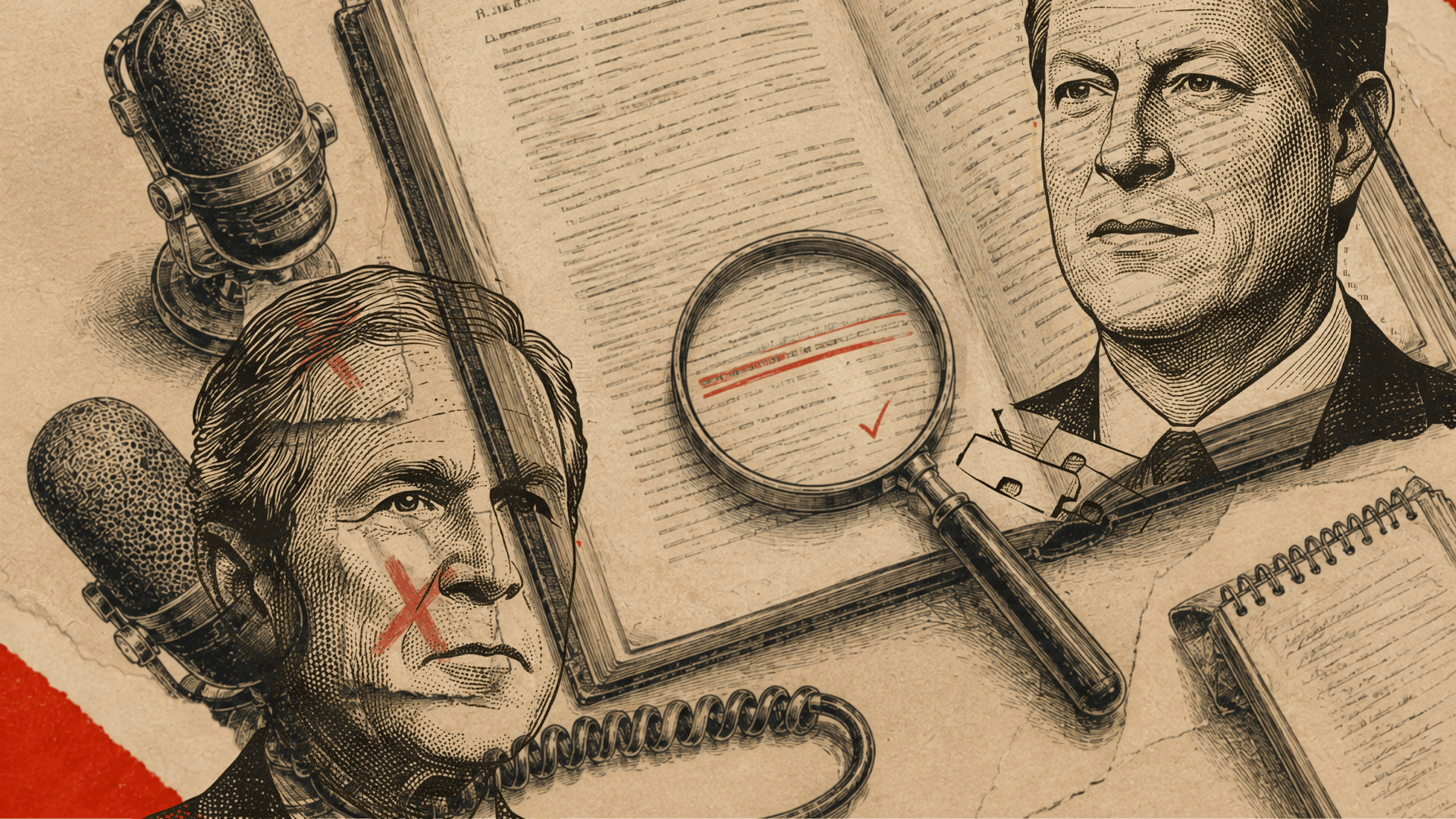
In 2000, George W. Bush narrowly defeated Al Gore in the presidential election, with a minuscule edge in Florida the deciding factor. The two camps then squared off in court over whether the state had to complete a recount, with the presidency in the balance. With the case almost certain to end up in the Supreme Court, Laurence Tribe, the famed legal scholar who managed the case for Gore and the Democratic Party, hired Goldstein, whose case-hunting practice had made him a known quantity at the Court, as a top lieutenant. Howe was on the team too. It was the most famous case in modern American law, and the scrappy couple from UNC was in the room.
In 2004, Goldstein founded the Supreme Court litigation clinic at Stanford. The program, the first of its kind, won national attention within a year. Elena Kagan, then dean of Harvard Law School, recruited him to start a second one. Students would work alongside members of the bar on real Supreme Court cases. They would draft petitions for certiorari, formal requests for the Court to hear a case, and merits briefs. They attended arguments and worked from roughly eight in the morning to one in the morning, editing every word. The schools that embodied the old pipeline had hired the American University graduate to teach their students his trade. “I really believe, since I went to AU, you don’t have to be some, you know, super super star to do the cases of the Supreme Court,” he told the jury. “So I would involve the students.”
When Scheiber first called about profiling him, Goldstein emailed a one-page Word document within ten minutes. It was titled “Prominent Members of the S. Ct. Bar and Their Backgrounds,” and it listed 14 of his most distinguished rivals and their credentials: law school, Supreme Court clerkship, time in the Solicitor General’s office. It was a catalog of everything he lacked, and a measure of the gap he was closing. He did not consider it boasting. It was a sales tool.
So was SCOTUSblog, the influential site he launched in 2002 along with Howe, who manually uploaded certiorari petitions while eight months pregnant. Within a few years it was read by every law clerk and legal journalist in the building. Before it found a sponsor, it cost roughly $250,000 a year to run. He paid for it out of pocket; over the years, by his own count, he would put $8 million to $10 million of his own money into it. Most of Goldstein’s peers in the Supreme Court bar didn’t know what a blog was, much less operate one. For Goldstein, it was a natural outlet. Howe later wrote that the blog began as a way to promote their legal work.
Howe likened it to an expensive beach house that was also a public resource and too much fun to stop. They maintained a strict editorial wall. On an April afternoon in 2017, when Goldstein stood before the justices to argue CalPERS v. ANZ Securities, Howe was in the room, but she sat in the spectator section. She had spent the morning blogging about Neil Gorsuch’s first day on the bench, but she did not write about her husband’s cases. Goldstein said Howe did not know the scale of his gambling.
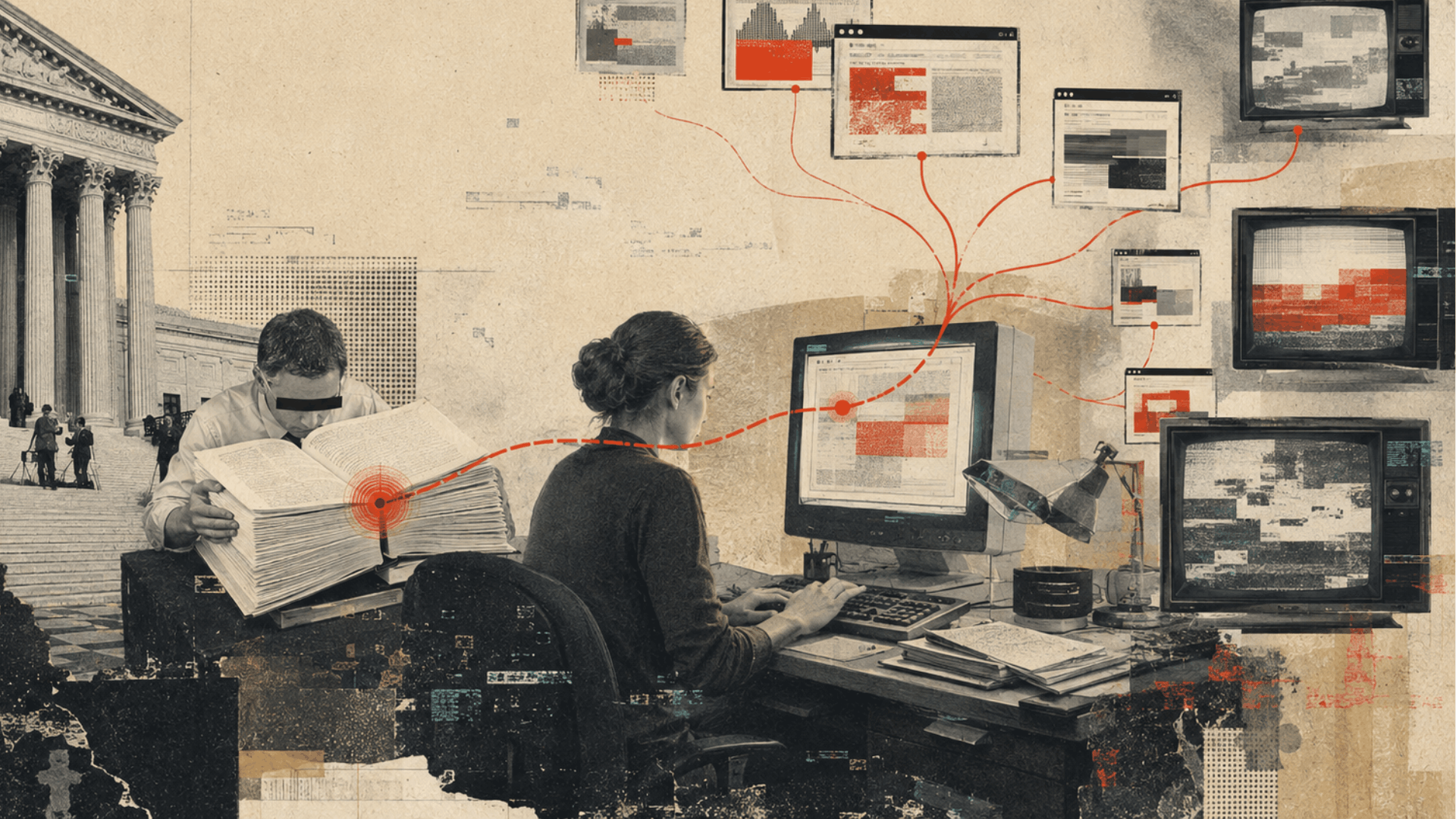
On June 28, 2012, the Supreme Court issued its ruling on the Affordable Care Act. The SCOTUSblog team was gathered in the same room, according to a later account from Goldstein. The team was operating nine computers on eight separate connections, with a conference call open to the major news organizations. Only Lyle Denniston, the veteran reporter, was permitted in the Court’s press area, because he alone held a press credential. Nothing about the ruling would go onto the blog until Goldstein agreed with it.
Chief Justice Roberts began announcing the decision at 10:06:40. Fifty-two seconds later, Bloomberg issued the first correct alert: the health-care law had been upheld. The Court rejected the argument that Congress’s power to regulate commerce justified the mandate. Bloomberg’s reporters kept reading. On the next page, they found that the Court had upheld it under Congress’s taxing power. CNN and Fox mistook the first rejection for defeat of the mandate and told viewers it had been struck down.
On the conference call, Goldstein announced that the government had lost on the Commerce Clause but that there was more going on that would require careful study. He muted the line. Amy Howe posted “parsing the opinion ASAP” to the live blog. Goldstein took what he later timed as almost exactly a minute to read the tax-power section. Then he turned to Denniston. “They win under the taxing power,” he said. Denniston answered, “Yes.” Goldstein dictated the update to Howe; she read it back to him and posted it.
The site had to scramble to find hosting on additional servers to handle the surge in traffic. “We thought we might have 250,000 people — we wound up having 2 million,” Goldstein later told the ABA Journal. The tiny operation had beaten every cable network in the country. The next year, SCOTUSblog won a Peabody Award. It was the first blog to receive the prestigious journalism award.
The Senate Press Gallery’s Standing Committee of Correspondents eventually took up whether SCOTUSblog should be credentialed at all, given the overlap between the blog and the law firm, shared staff, shared office space, a publisher who argued cases before the court he covered. In June 2014, the committee said no. “The law firm and the blog need to be separate,” it wrote. “They cannot share staff, phone lines, office space and above all the editor cannot also advocate on behalf of the law firm and its clients.” Goldstein did not reapply. Separating himself from the firm was the one thing he would not do.
Goldstein’s bootstraps story was almost built for the Hollywood treatment. And in late 2009, NBC bought the rights to develop a television drama based on his life. The show was called Tommy Supreme. A former public defender named Barry Schindel, who had written for Castle and Law & Order, signed on as showrunner after reading the New Republic profile. Goldstein was flattered and bemused. “It struck me as both flattering and crazy,” he said. “My life isn’t the stuff of dramatic television, as I’ve experienced it.” He offered one assurance about the fictional version of himself: “This character will likely do some things that are a little closer to the ethical line than I did. There’s going to be a lot of daylight between this guy and me.”
But Goldstein was already becoming consumed with poker, the game that would put his ethics to the test. When the Carolina Alumni Review profiled him in 2017, it mentioned that he at one point dabbled in high-stakes poker, but said that he’d given that up. That wasn’t exactly true. It said he was happily settled in a comfortable life as a suburban dad working through a pile of legal briefs each night. “I think most people would find what I do boring,” he said.
That wasn’t true either.
With additional research from Owen Scheck
To be continued in Chapter 3: The World
Chapters 3 and 4 arrive on Monday, 21 September. Subscribe free for an excerpt and a link to each new instalment, delivered directly to your inbox.
Only new stories and instalments from The Foundry. No unrelated promotions. Unsubscribe any time.