

Sep 22, 2026
12 min read
Welcome back to The Foundry, the new digital magazine from Brazen. We’re interested in extraordinary characters and the worlds they inhabit: their ambitions, their contradictions and the choices that change their lives. We’ll often publish their stories in parts, in the spirit of the old magazine serials. No fancy gadgets or video clips, just the story, presented as we’d like to read it.
We’re beginning with The Tell. All eleven chapters are free, and you don’t need to give us your email address to read them. If you’d like an excerpt and a link when the next instalment arrives, please subscribe. You’ll also hear about future Foundry projects, including a Vatican scandal and a nuclear history project with new discoveries.
We hope you enjoy it, and that you’ll stick around for what comes next.
More from Brazen: investigative reporting at Whale Hunting, long-form narrative podcasts at Brazen FM, and updates on Instagram.
Below are Chapters 5 and 6. Two more chapters will appear each day from tomorrow through Thursday, 24 September, followed by the final chapter on Friday, 25 September.
New to The Tell? Start with Chapters 1 and 2, or catch up with Chapters 3 and 4.
Chapter 5: The Score
By Bradley Hope
With editing from Brad Reagan
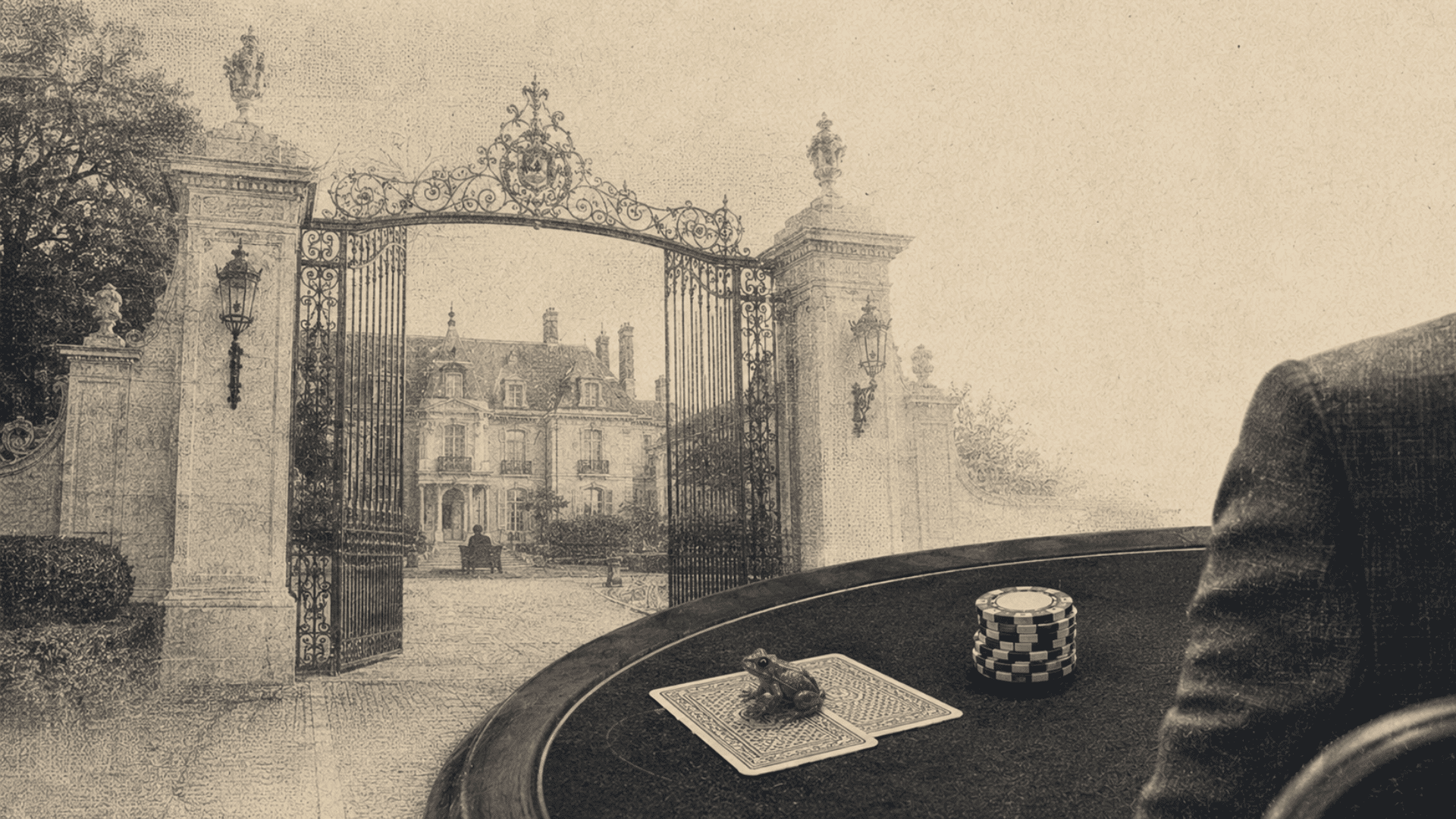
Beverly Park is a gated community above Beverly Hills, carved into the hills north of Sunset Boulevard. There are dozens of estates on two hundred and fifty acres, private security patrols and no public access. Visitors have to give their names at a gatehouse and wait while a guard calls ahead to confirm they are expected. A private road runs past hedgerows and stone walls concealing immense houses on large lots. Denzel Washington, Eddie Murphy and Rod Stewart are among the A-list celebrities who have lived there. There are no sidewalks.
Alec Gores’s mansion sat on one of these lots. The 31,000-square-foot French chateau-style house had a grand motor court and a dedicated home theater below the main level, where the poker table was set up in the dark. Goldstein drove up in November 2016 from his rented apartment in Hollywood. Gipson came too, as the friend from Macau. The sessions lasted about seven hours each.
Gipson watched Gores for signs of a bluff or a strong hand. Between sessions, he passed his observations to Goldstein, who revised his strategy before play resumed. Robl, who had designed the operation, joined them for some of the sessions. Gores knew him, and knew what he did for a living, but he had accepted Robl as the man who guaranteed Goldstein’s credit line, not as a coach.
Gipson recalled that when Gores was losing he told him to move — he was messing up the flow of energy. Gores “kept moving me around the room like I was a piece of furniture,” Gipson testified.
Gores also had a frog, a small figurine that he placed on top of his cards for luck. When he was winning, the frog stayed on the cards. When he was losing, he moved it to the top of his chip stack, so the frog could survey the table and help change the luck of the game.
The frog, Gipson later testified, did not help.
Gores tried changing the deck, the dealer and the time of day they played. He rearranged the room and shifted the people in it. Gores did not know that his bad luck was rooted in the deep analysis of his playing style by Goldstein’s team.
Goldstein’s strategy was to use what the team knew about Gores to make better decisions in smaller pots. Across hundreds of hands, a small advantage could add up to huge sums.
The sessions ran through November and into December—five, or possibly six; Goldstein later testified that he could not be sure. Gores kept returning to play at home. He had beaten other players there and sometimes beat Goldstein, too. “He won sessions. He got up a lot,” Goldstein would testify. “But overall, across those five sessions, he lost roughly $26 million.” After each session, Goldstein drove back down the hill through the gates of Beverly Park. The total winnings made him increasingly confident that poker could pay for his spending and the debts already accumulating underneath it, not to mention a future where money was no longer an issue.
* * *
In November 2016, Goldstein won $9 million from Gores. In December, he won another $17.4 million. Years later, Rick Salomon summed up the result at trial: “He crushed him.”
Gores’s family office tallied his losses at $26,435,000 and reported the amount to the IRS on a Form 1099.
As his losses mounted through the fall, Gores continued inviting Goldstein back but took longer to pay him. “I was being suspicious,” he testified.
Goldstein pressed for payment. To Gores, the requests were beginning to sound like a threat of legal action.
“Basically, if I understood him right,” Gores testified, “he was starting toward like he was going to take me to court if I didn’t pay.”
The pressure was coming from behind him as well, Goldstein explained: his backers were demanding their money. “I have to take some proportion of the money out because I gave the Chinese a piece in order for the guarantee,” he wrote to Gores.
Gores eventually sent the money by wire to Goldstein’s personal bank account, which he called his “gambling account.” It did not sit there long. Some of the money was owed to backers. Goldstein later testified that the balance owed to Phua at the end of 2016 was about $9 million.
Some of the winnings helped to cover debts from other games, ring games where Goldstein had played without a strategic edge. Some went to the life he was running in parallel: the apartment in Los Angeles, the travel between coasts, the expenses of a man maintaining two existences on different scales. The winnings from the most profitable two months of his poker career were dispersing almost as fast as they accumulated.
At forty-six, Goldstein had won the biggest poker score of his life but he felt broker than ever.
Chapter 6: The Swap
A week after the last Gores session, Goldstein was in Manila.
The target was Tang Hao, a Chinese investor based in Hong Kong whom the poker world knew as Tango. He was self-made, with an exceptional gift for quantitative investing. Forbes estimated his fortune at $5.1 billion in September 2026. But one Hong Kong banker told me Tang was worth tens of billions of dollars. He described Tang as one of the wealthiest people on the planet whom almost nobody had heard of.
I met Tang in the summer of 2025 in Tokyo, in an expansive living room with the city’s skyline filling the windows. We were there to discuss a poker documentary project I was working on. Staff swept in with water and tea and withdrew. Tang sat comfortably in a chair, well dressed in an understated way. He listened more than he spoke. Over several conversations, he described how he had made his money and why he played poker.
His parents were teachers. In college, he said, he borrowed money from his mother to buy cartons of cigarettes in Xiamen, where they were cheaper, and carried them home to Nanning to sell. His mother accused him of speculation.
He earned a bachelor’s degree in computer science in China and went into software engineering. In the late 1990s, he used open-source software to build a system that routed international telephone calls into China cheaply. At its peak, he said, the company handled 20 to 30 million minutes of calls a month, taking a small cut on each transaction.
Around 2004, he adapted his voice-over-internet billing and customer-service technology to establish a business licensed in the Philippines, supplying software to casino operators for a fee. He said he supplied their systems but did not run the casinos or sign up individual gamblers. Tang compared his former business to suppliers such as Evolution and Playtech, the London-listed gambling-software company in which he is also a shareholder.
In 2010, China was cracking down on online gambling, including overseas websites serving Chinese customers. Tang said his software business was caught up in the campaign and that he paid RMB66 million. He had believed his Philippine licence protected his business; the experience persuaded him to leave the industry and concentrate on his financial business in Hong Kong. He subsequently sold the software business to local gaming operators. Asia Gaming was established only after he had left the business, he said.
He had also founded Goldenway in Hong Kong in 2009, applying his programming skills to bullion and foreign-exchange trading. Customers could trade through an app instead of by telephone. He said the app made pricing more transparent, trading more efficient and orders easier to place, helping him take business from the established dealers.
Tang eventually stopped running businesses day to day and began looking for investments he could leave other people to manage. In March 2017 he spent more than 340 million Canadian dollars buying shares in Amaya, the owner of PokerStars. He kept buying as Amaya changed its name to The Stars Group that August; by January 2018, he held 17.9 percent. By September 2019, he was largely out of the investment, holding less than 1 percent.
An early stake in AppLovin, the advertising-technology company that went public in 2021, became a major part of his fortune. Tang compared AppLovin to a stock exchange for advertising traffic that never closed. The platform worked like a flywheel, he told me: more demand brought more supply, and more supply brought more demand. He bought the Ambassador, a 361-foot superyacht formerly owned by Russian oligarch Dmitry Rybolovlev, for US$300 million.
His wealth had also made him a target. In 2020, a man in Hong Kong demanded HK$300 million and threatened Tang’s family, according to a copy of the police report I reviewed. Tang refused to pay and reported the threats to the Hong Kong police.
A former Goldenway client who organized protests against the company later admitted to investigators that he had helped arrange a filmed assault on himself and falsely blamed Goldenway to provoke a government investigation. He said he had worked with a man he identified as a Macau organized-crime figure. He told the investigators that Hong Kong police and regulators had told him Goldenway had broken no local laws or regulatory rules. His account was provided by W1 Global, a firm commissioned by Tang’s advisers and run by former FBI agents who led the U.S. investigation into the 1MDB scandal.
The threats forced Tang away from his home. He later faced extradition proceedings in France over an allegation by police in Lvliang that he had opened a casino. He said the Hong Kong organized-crime group behind the 2020 threats renewed the HK$300 million demand by telephone in December 2024, during those proceedings.
Tang and his family still face threats to their safety. “I just want to be with my family without worrying about what might happen to them,” he told me.
In January 2025, the Aix-en-Provence Court of Appeal ruled against extraditing Tang in the Lvliang case, finding that his right to a fair trial was not guaranteed.
I couldn’t help thinking that, had Tang been born in Houston, his might be the kind of biography America canonizes: a hustler who made it, in the sense Americans use with admiration.
Short sellers cherry-picked allegations against Tang to build a case against AppLovin. In June 2025, Culper Research published a report on the company making allegations about Tang, its largest early Asian investor. Culper had taken a short position in AppLovin, a bet that would profit if its shares fell.
I spent months checking allegations about Tang against court records, corporate filings and correspondence. I found nothing in that material to substantiate the central allegations against Tang. Versions of Culper’s allegations have circulated online ever since.
* * *
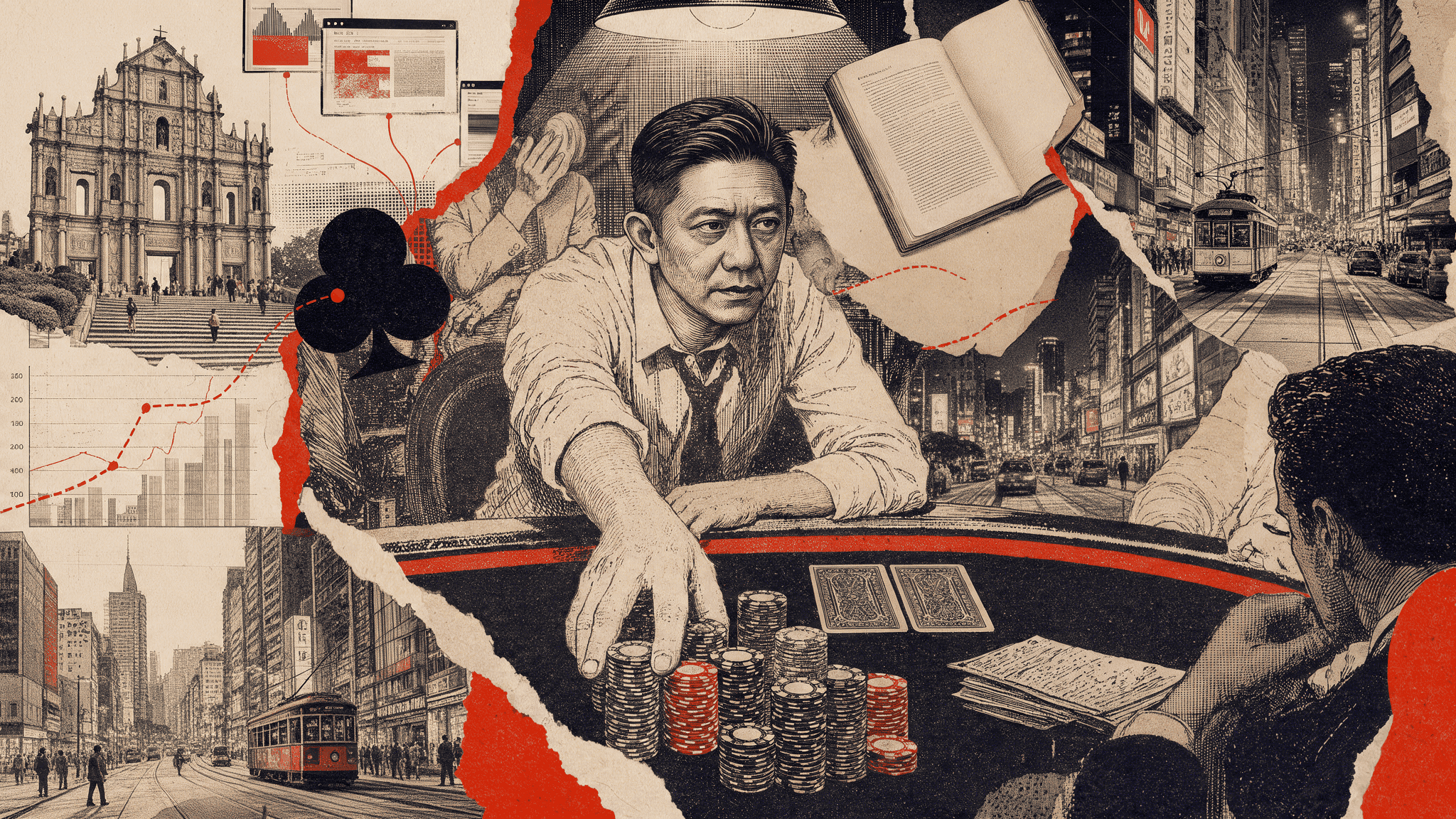
Tang had played poker since college. Poker gave him another place to put his judgment to work. “I only gamble when I have an edge.”
He also described poker as the most efficient way to get to know people. Players could fold a hand and talk, and when they played for enough money, he said, their personalities showed. He had traveled to games in Macau, London and France, making friends and building relationships. He still plays frequently, in Las Vegas and elsewhere.
Years after the match, Tang told me he considered himself a better player than Goldstein. “I’m much better than he is. I play against the best.”
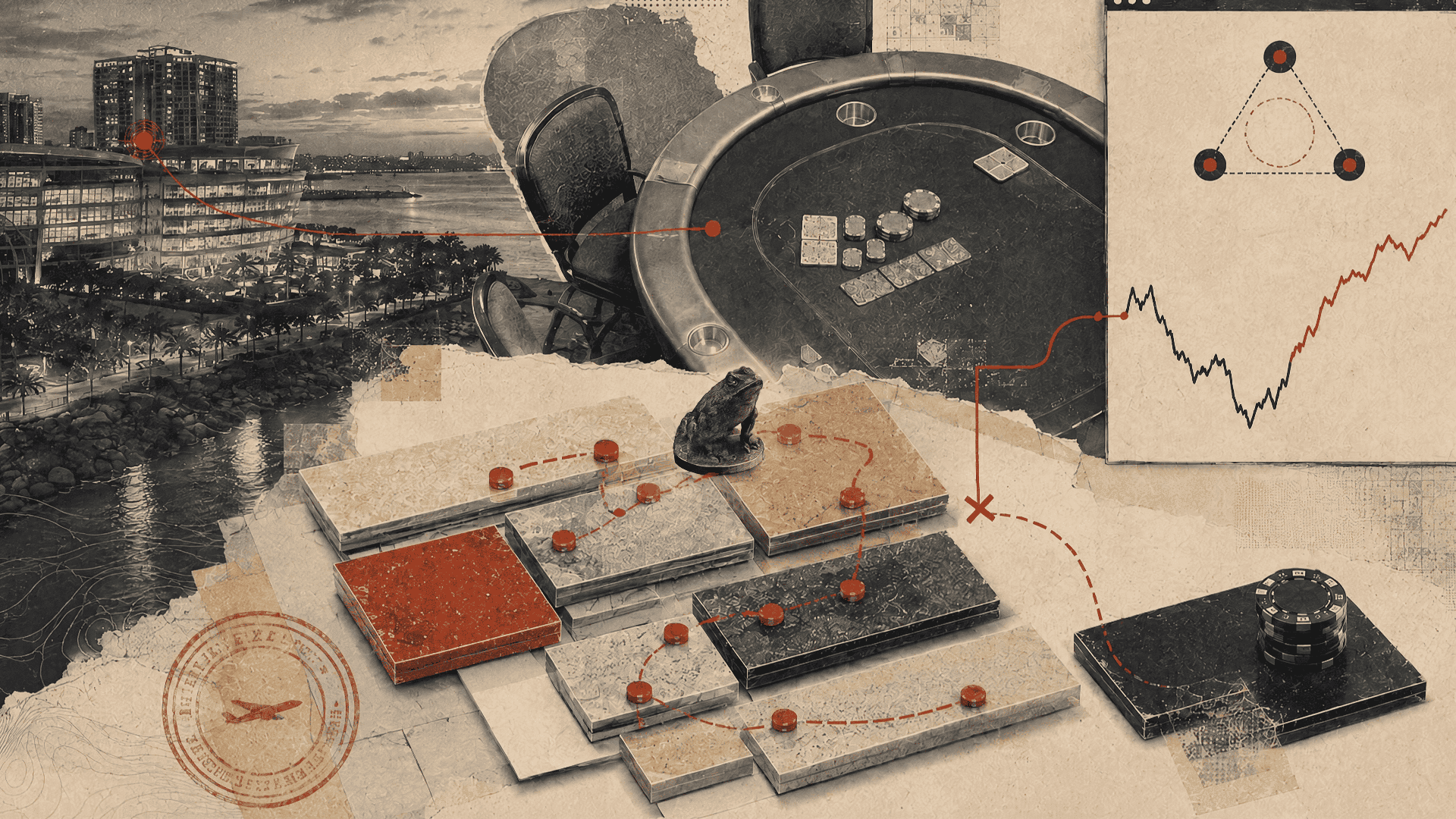
The game with Goldstein had taken place in December 2016, in the private rooms of the Poker King Club at the Solaire Resort and Casino in Manila, a glass-and-steel resort on the shore of Manila Bay. The main casino floor was large and bustling. Run by the Hong Kong poker impresario Winfred Yu, the club had authorization from the Philippine gaming regulator to run games denominated in Hong Kong dollars rather than pesos.
In Manila there was no catered food or casual banter about sports or business. The rooms were silent, with eight-figure swings in fortunes. The chips were different, too: often rectangular plaques, each representing hundreds of thousands of dollars, stacked in towers.
The players did not drink or look at their phones. They stared at each other across the felt, trying to detect physical tells that betrayed a bluff or a monster hand. Phua had brought Goldstein in, as he had with the Chairman, and held a third of the action.
This time the game was three-handed. Goldstein, Tang Hao, and Stanley Choi, a Hong Kong businessman who had won the 2012 Macau Super High Roller for HK$50.1 million, beating Phil Ivey in the process. Choi was the founder of Head & Shoulders Financial Group and a regular on the Triton Poker circuit. Goldstein now had two opponents to account for on each hand, and the player with the biggest stack could put pressure on both of the others. Here the blinds—the forced bets that seed every pot—were 50,000 and 100,000 Hong Kong dollars, so those decisions could have seven-figure consequences.
Goldstein brought Rosie Roff, a British model who sat behind him during play. For a stretch, Tang had Goldstein down far enough to end Robl’s stake.
Tang says he noticed something else at the table. He had rated Goldstein as a weak player, but Goldstein was playing well above that rating. Tang concluded that he was being coached.
Gipson had developed the strategy in advance. He called it “small ball.” At trial, Gipson explained the strategy he had given Goldstein for the three-handed game: “Just focus on winning small pots, and when they’re showing aggression of big pots, it’s okay for them to win. You’re going to win most of your money from the small pots.” It was the method honed in Beverly Park with Gores. Goldstein was trying it against two opponents now.
The texts before and during the game tell the story in fragments, with the participants given code names. Phua was Saba. Tang was Tango.
“Trying to get Saba to let me play Tango big.”
Gipson declined a stake in the three-handed game: “I’m off for three-handed play.”
“Back in with Tango in 20 minutes.”
Then, from Gipson, interpreting Goldstein’s text: “He’s saying he won 80 million Hong Kong dollars.”
Goldstein said he had won $13.4 million, the figure both sides at trial stipulated he had given. On the stand, after reviewing messages to refresh his memory, he put Tang’s total loss at 91.85 million Hong Kong dollars, or $11.85 million. Before the recovery, Goldstein’s losses had exceeded the stop-loss cap on what Robl recalled as a five percent stake. “I don’t believe I made money from that particular match,” Robl would later testify.
Three months after the game, Goldstein said he had not been paid.
In March 2017, he texted Gipson about Phua: “Delicate situation with him because Tango still hasn’t paid the 12 he lost to me.”
Phua had guaranteed the credit at the table. The calculation Goldstein confirmed after the games put Phua’s portion at about $4 million. Settlement ran through him, as it did in his games.
Gipson had already received $178,000 from Goldstein on December 23, 2016, for his share of the Tango matches; other backers were still waiting.
The prosecution called the settlement the Tango Swap. Goldstein testified that he owed Phua about $9 million from the Gores winnings, while Phua owed him about $7.8 million from the Manila games. In his account, they offset those debts rather than sending both large payments back and forth, leaving him owing Phua about $1.2 million. He described sending money, at least partly through Tom Dwan, a poker professional who frequented the high-stakes games in Asia, and said that he and Phua were then even. The document prosecutors called his poker journal did not list the Tango winnings; Goldstein described it as a list of wires and checks.
Years later, in March 2022, Alec Gores would sell his 31,000-square-foot Beverly Park mansion, the same house where Goldstein had won $26.4 million, in a $70 million all-cash, off-market deal. The buyer was a US company controlled by Tango.
* * *
Back on December 17, 2016, the day after the Manila sessions ended, Goldstein sent a text to the group thread with Robl and Gipson. Prosecutors walked Gipson through the message on the stand:
“Just doing a little tallying on our efforts. We’ve had three targets, Chairman, Gores, and Tango. We’ve played 11 sessions. We are nine and two. Our average is plus U.S. 4.63 per session. Conservatively, each session took seven hours. So 77 hours total. Average win rate of 660,000 U.S. dollars per hour.”
The overall take was roughly $50 million. But most of the money was already committed to Goldstein’s backers, other gambling debts and his expensive private life. He was spending money faster than he could generate it.
He could not count on those games continuing.
“Chairman, Tango, Gores,” Goldstein said from the witness stand. “They weren’t going to keep playing me.”
With additional research from Owen Scheck
To be continued in Chapter 7: The Leak
Chapters 7 and 8 arrive tomorrow, Wednesday, 23 September. Subscribe free for an excerpt and a link to each new instalment, delivered directly to your inbox.
Only new stories and instalments from The Foundry. No unrelated promotions. Unsubscribe any time.