
Sep 23, 2026
21 min read
Welcome back to The Foundry, the new digital magazine from Brazen. We’re interested in extraordinary characters and the worlds they inhabit: their ambitions, their contradictions and the choices that change their lives. We’ll often publish their stories in parts, in the spirit of the old magazine serials. No fancy gadgets or video clips, just the story, presented as we’d like to read it.
We’re beginning with The Tell. All eleven chapters are free, and you don’t need to give us your email address to read them. If you’d like an excerpt and a link when the next instalment arrives, please subscribe. You’ll also hear about future Foundry projects, including a Vatican scandal and a nuclear history project with new discoveries.
We hope you enjoy it, and that you’ll stick around for what comes next.
More from Brazen: investigative reporting at Whale Hunting, long-form narrative podcasts at Brazen FM, and updates on Instagram.
Below are Chapters 7 and 8. Two more chapters will appear tomorrow, followed by the final chapter on Friday, 25 September.
New to The Tell? Start with Chapters 1 and 2, or catch up with Chapters 3 and 4 and Chapters 5 and 6.
Chapter 7: The Leak
By Bradley Hope
With editing from Brad Reagan
What was left of the fifty million lasted less than a year.
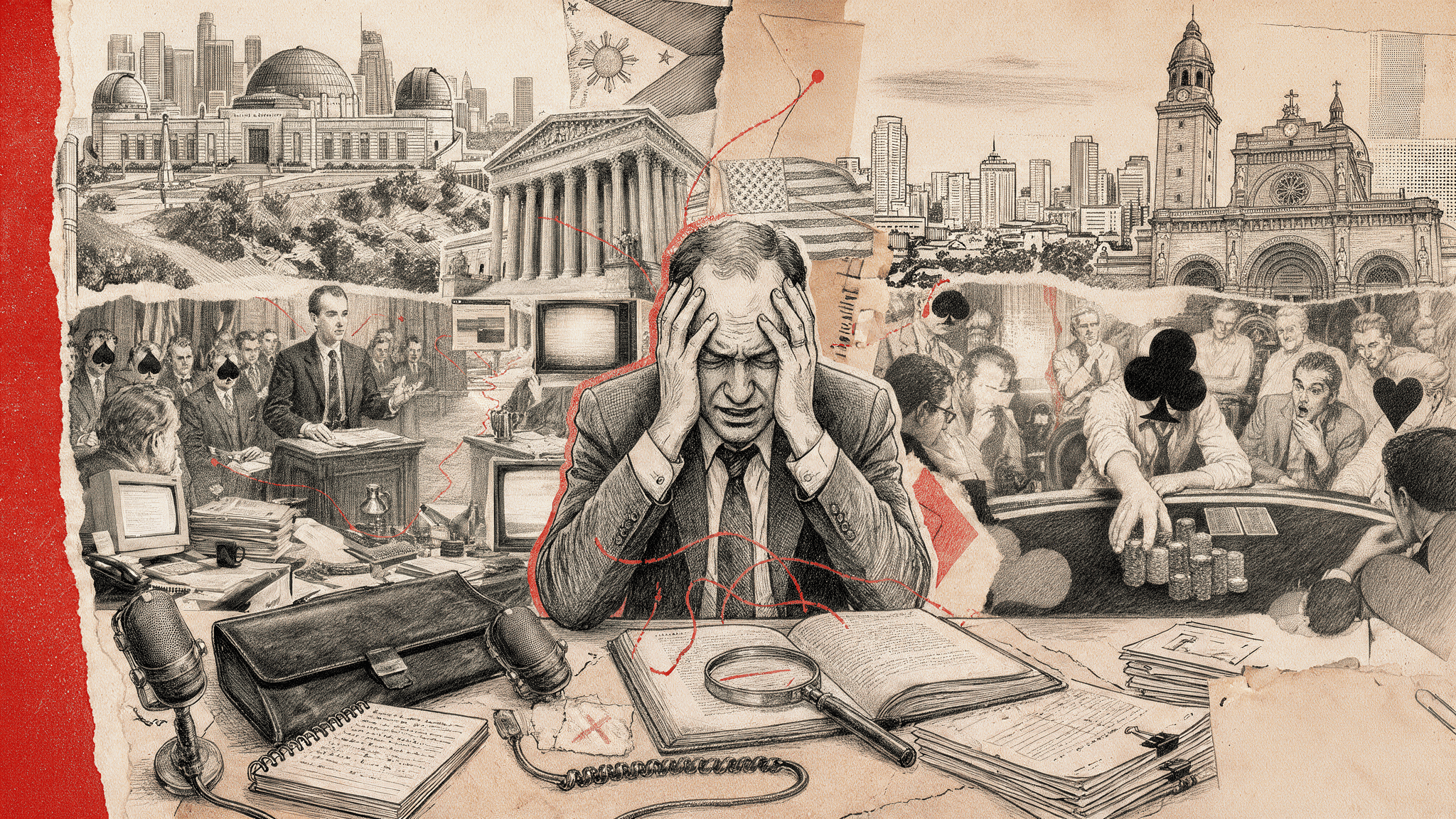
Goldstein had cleared roughly $12 million from the 2016 campaign after paying his backers. The Resnick debt was still outstanding and the ring-game losses continued.
Even during the winning campaign, he had been paying out money. Goldstein’s own spreadsheet of poker wires listed, under “out,” a $750,000 payment on December 31, 2016, to Daniel “Jungleman” Cates, one of the best heads-up players in the world, bracketed “Last Manila trip.” The parties stipulated it as a 2016 poker loss or staking payment; on the stand, Goldstein said Phua had directed him to send it out of Phua’s share of the Gores money. Either way, three-quarters of a million dollars went to a professional; Goldstein’s spreadsheet tied the payment to the Manila trip where he beat Tang Hao.
That April, eight days apart, he argued two cases before the Supreme Court: on the 17th for the California public employees’ pension fund, in a securities case about how long investors have to sue, and on the 25th for a group of out-of-state plaintiffs suing Bristol-Myers Squibb over the blood thinner Plavix, opposite Neal Katyal and a lawyer from the Solicitor General’s office. Eleven weeks before the first of those arguments, on February 1, he had routed a $250,000 fee from Robbins Geller, his co-counsel on a Lehman Brothers appeal, into his personal poker account at Wells Fargo.
Goldstein had been losing at heads-up poker to Bob Safai, the Los Angeles real estate developer. He paid out $6.7 million in November and December 2016, in the same weeks the Gores wires were landing, and another $5.4 million between January and May 2017. Most of the last Gores money he pulled from the account in January went straight to Safai.
Safai was a skilled high-stakes heads-up player. Goldstein was facing someone who understood the game at the highest level and, by Safai’s own account, played much as he did. Asked at trial to describe Goldstein’s style, Safai called it “aggressive and erratic at times.” Asked to describe his own, he said: “Exactly the same.”
For Goldstein, the matches were an expensive mistake rooted in his own misplaced confidence that his run came from personal genius rather than a specific system. “I just have convinced myself because I won 50 million in heads-up poker that I am a savant at heads-up poker,” Goldstein told the Times.
Goldstein played Safai without backers. There was no staking arrangement or 75-25 split with investors to absorb the losses. Every dollar on the table was his own.
The reckoning came around Labor Day, 2017. Safai was at his home in La Quinta, in the desert east of Palm Springs, when Goldstein called to say he was in town and wanted to play. Safai drove in to meet him. There was no pre-agreed stop loss, no ceiling on how much either man could lose. “We didn’t determine that up front,” Safai testified. The match took place over two days, first at a hotel, then in Santa Monica. Over those two days, Safai won roughly $6 million off Goldstein.
They kept playing until Goldstein’s net losses reached $14 million, more than his own share of the winnings from the previous heads-up sessions combined. He won $3.2 million in sessions along the way in 2017 and reported none of those winnings, though his losses outweighed them.
Against Gores, Goldstein had Robl’s coaching, backers sharing the risk and a carefully designed strategy. Against Safai, he lacked the same preparation and had no backers to share the losses.
“You chase the losses,” Goldstein told the jury. “You think that you can beat somebody, and then you lose and you lose and you lose. That’s what happened.”
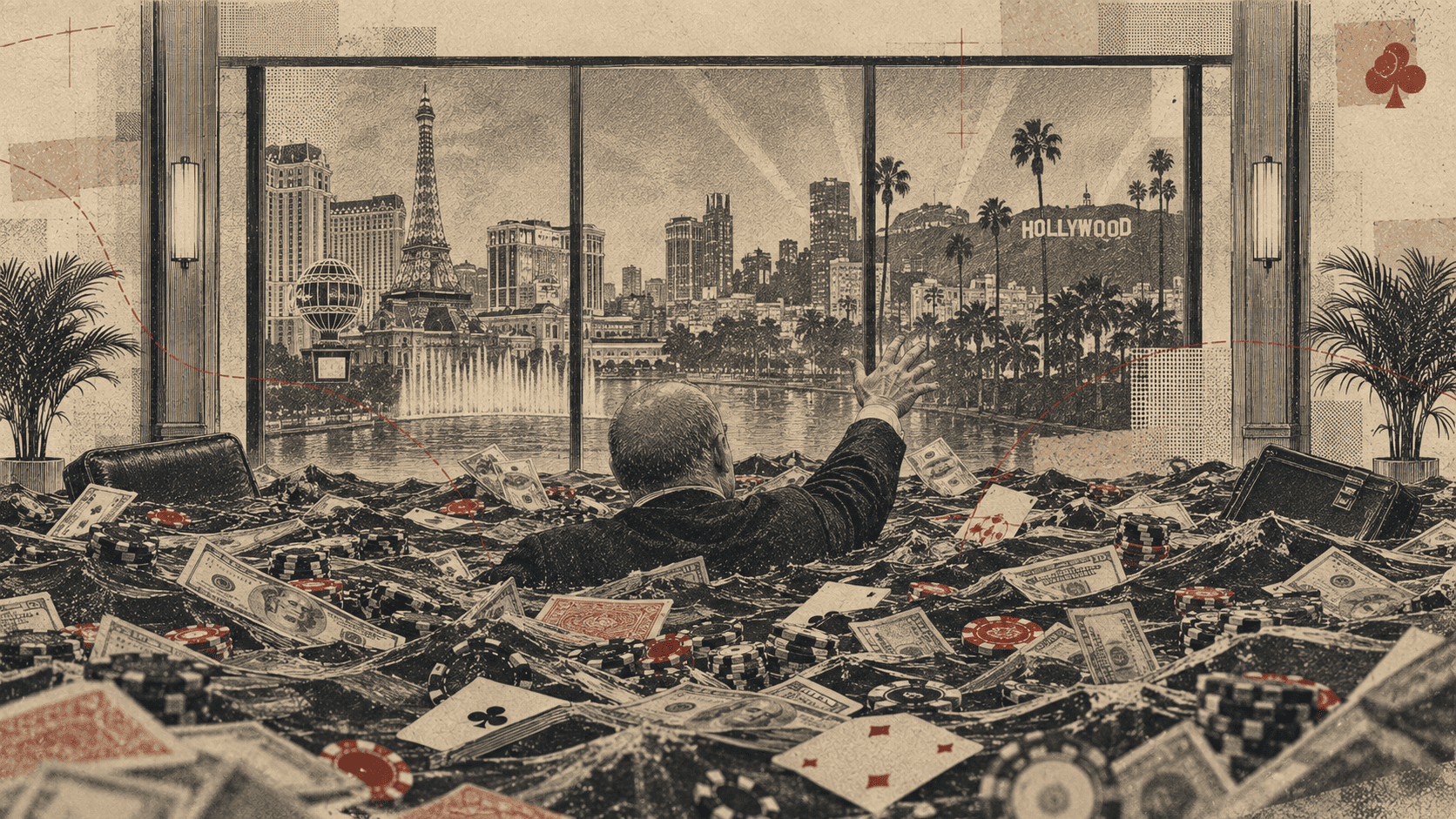
He could not pay Safai in full and had to settle the debt himself, in installments. Safai made him sign a promissory note. He testified it was the only time he had ever required one. “That would never happen,” he told the jury when asked whether other players had required him to sign one. “Because I pay my losses in forty-eight hours.”
Goldstein paid slowly. Safai eventually sold the remaining debt to another player, Edwin “Eddie” Ting. “Ever since I didn’t collect it, the promissory note was like a black cat,” Safai testified. “I was losing. I got to get this off my back.”
Goldstein, who had put his 2016 gross winnings at $660,000 an hour, now owed the unpaid balance to Ting.
“The money is gone,” Goldstein testified. “There is no way to play higher stakes, and nobody is going to invest in me.”
Goldstein entered a five-year stretch in the wilderness, where he continued to play, but the scale was, as he put it, “very, very different.” Goldstein was back in the smaller games, rebuilding. What remained was the grind, and Goldstein had never been a grinder. He still argued at the Court, the firm still carried his name, and, by his account, Howe still thought her husband played poker recreationally.
Goldstein kept a Word document that prosecutors would call his poker journal. Two versions survived, from January and October 2017.
Between those versions, prosecutors said, Goldstein added $3,070,000 in reductions to his 2016 gambling income. In closing, they said he had admitted on the witness stand that none of the three large entries was deductible from his 2016 gambling winnings. By their calculation, the changes saved him more than $1.1 million in tax.
His accountant, Walter Deyhle, received neither version. On October 12, 2017, Goldstein emailed him figures showing $27.2 million in gross gambling winnings for 2016, reduced to $2.75 million after losses and payments to investors.
Deyhle had been Goldstein’s accountant for years. Gelman, Rosenberg & Freedman kept offices right around the corner from Goldstein’s law firm, and the two men would occasionally meet in Goldstein’s office to talk through tax preparation. Deyhle prepared the returns from the numbers Goldstein gave him. He knew Goldstein gambled and paid shares of his winnings to investors. “So we are a 100 percent dependent upon the client to provide us with all tax information of which they are aware,” Deyhle told the jury. “I mean, if a client gives us information that’s false, we accept that information.”
At trial, Deyhle was asked what he could have done with the real figures. “If he had just told me,” Deyhle said, “we could have dealt with it.” Offsets and deductions could have reduced the liability. “It was just a number.”
Asked how long he would have kept Goldstein as a client if he had known Goldstein had lied to him year after year, Deyhle said: “He would have been terminated immediately.”
Goldstein had told Deyhle he had no gambling winnings in 2017. He had won $3.2 million from Bob Safai that year and lost more than he won. Deyhle testified that the winnings had to be reported as income, with losses deducted separately up to the amount won. Even if those deductions left no taxable gambling income, the winnings still had to be reported. He acknowledged that he had never explained the rule to Goldstein. Goldstein said he had understood the question to mean whether he had won money overall. The jury later acquitted him on the charge concerning his 2017 personal tax return.
A revenue officer named Parrish had contacted Goldstein on March 26, 2018, about his unpaid 2016 tax liability. The $1,679,000 from the falsified return was still outstanding. Revenue officers handle collections, not criminal investigations.
Goldstein’s opening question to her was: “Are you from IRS Criminal Investigation?”
Goldstein told Parrish he had no gambling income in 2017, although he had won $3.2 million that year. The government would eventually calculate his total tax liability at more than $5.3 million for tax years 2016 through 2021.
At trial, when asked about the bookkeeping or accounting experience of Angie Gou, the office manager, Deyhle said, “I think pretty much none.” Each year, he said, Gelman’s accounting team had to clean up the firm’s books, to the frustration of the partner who ran the team, Ian Shuman.
Goldstein’s legal and gambling worlds were increasingly tangled.
Paul Napoli, a New York trial attorney, put $500,000 of his firm’s money into Goldstein’s poker playing in 2017; his chief financial officer, Napoli testified, thought it was “crazy.” Goldstein pitched it as backing for a future match against Safai without mentioning that he was already losing to Safai. The money went to Safai to settle an existing debt. Napoli’s firm eventually got its money back, plus roughly $90,000 presented as its share of the profits. The last $125,000 of the repayment was an offset against legal fees the firm owed Goldstein.
In another instance, Robl owed Goldstein $175,000 from a poker debt. Goldstein directed the money to Napoli Shkolnik, repaying part of the poker investment. The accountants were told it was a legal expense. It was not. Robl testified he had no idea who Napoli Shkolnik was.
In 2021, Tobey Maguire owed Goldstein’s firm $500,000 for legal work. Goldstein told him to pay Safai instead, reducing a personal poker debt that still ran into the millions.
The firm paid for a Bentley and a Hollywood apartment. It also paid women listed as employees whose work remained unclear. Chuck Pacheco, a talent manager, professional gambler and former Goldstein client, received $170,000 from the firm as a gambling payment.
In 2021, Goldstein did legal work for Tang Hao, the same Tango he had beaten in Manila.
Bank records introduced at trial showed money moving from Phua’s account at Universal Capital Bank in Montenegro to Goldstein’s personal account at the same bank. It then moved to his law firm’s account there before being wired to Wells Fargo in the United States. The transfers made offshore poker payments look like law firm revenue. Goldstein told investigators the bank account “was opened for these transactions.” He never filed the foreign bank account report that federal law required.
Back on October 7, 2020, Goldstein argued Google LLC v. Oracle America, Inc. before eight justices of the Supreme Court from his office in Bethesda, Maryland. The argument was conducted by telephone because the Court was operating remotely during the pandemic. Justice Ruth Bader Ginsburg had died the month before, and her replacement had not yet been confirmed.
The case concerned whether roughly 11,500 lines of Java API code that Google had copied into Android were protected by copyright and, if so, whether the copying was fair use.
Microsoft, IBM and the Electronic Frontier Foundation had filed amicus briefs. The Computer and Communications Industry Association warned that an Oracle victory would “upset the entire technology sector.” The Obama and Trump administrations had both supported Oracle’s copyright claim.
This was Goldstein’s forty-fourth argument before the Court. As Google’s counsel of record, he fielded questions from Chief Justice Roberts and Justice Kavanaugh. Nearly six months later, the Court would rule 6–2 in Google’s favor on fair-use grounds. Goldstein had won again.
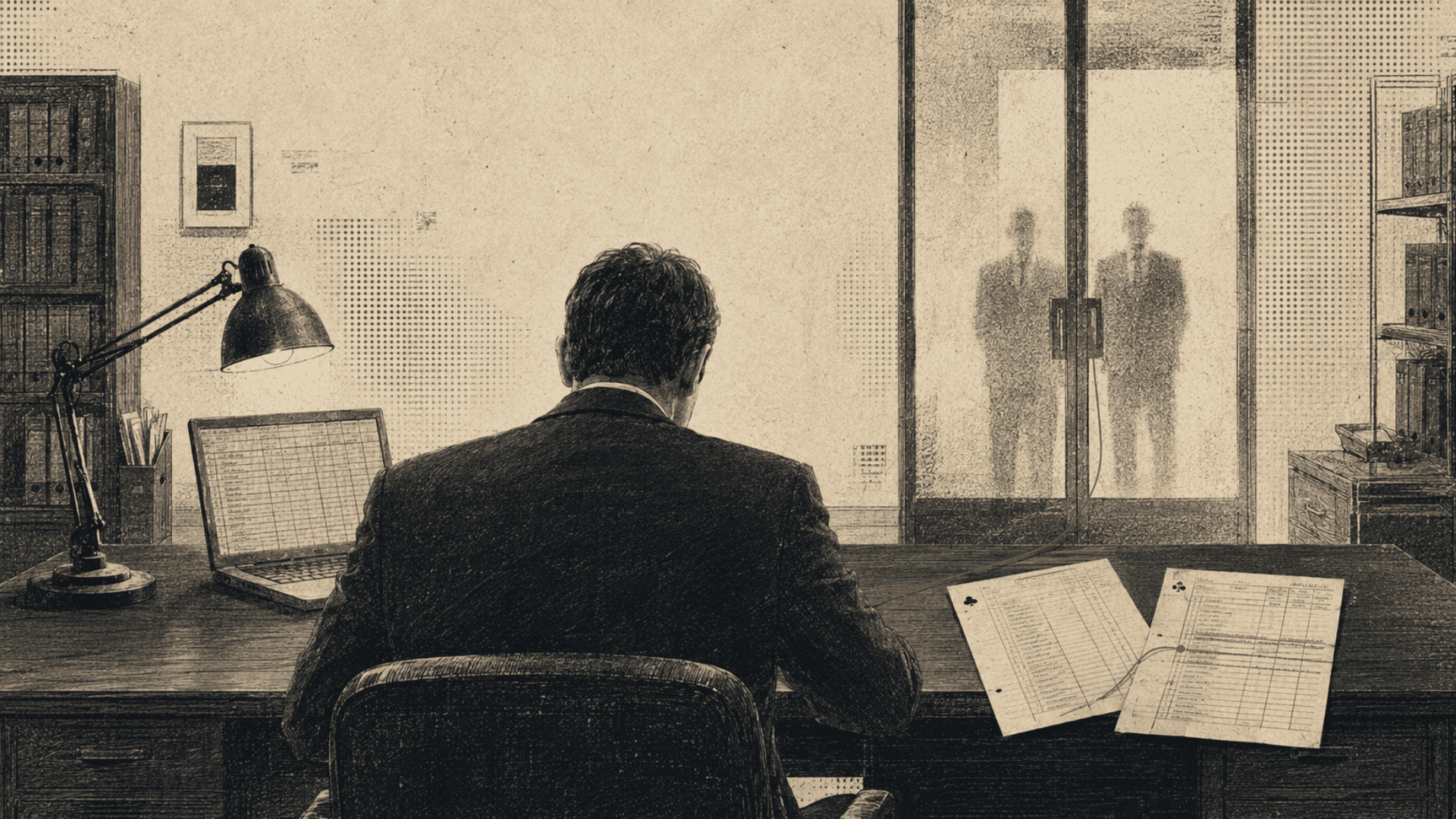
Unbeknownst to his clients and colleagues, at the time of the argument, Goldstein was under federal investigation for tax evasion. Seven days later, on October 14, IRS special agents arrived at the law offices of Goldstein & Russell in Bethesda, Maryland.
Due to the pandemic, the office was nearly empty when they came. But Katie Bart, the office manager, was there. Goldstein was at a conference in Baltimore. Bart reached him, and he drove back; at six that evening the agents returned and questioned him for two and a half hours in the firm’s conference room, about his finances, his gambling and his debts.
Bart had been with the firm for two years. The job managing the office of a Supreme Court advocate had required learning quickly. As she later testified, the training period had been intense: “I think I was just trying to write down everything that I was being told as I was — it was a lot of information for two weeks of training.” That night, she felt “dread” and wondered whether she wanted to keep working at the firm. She did not sleep that night.
By October 15, 2020, she had sent her resignation letter to all the partners. The message was brief: she could not continue. Goldstein’s response came by text: “I’m crushed.” Then: “Did I do something here?”
Goldstein panicked. “My first reaction was to feel terrible for her,” he testified. “And then my second reaction is, ‘Oh, my God, what is this going to look like?’”
Bart was the single person who spanned both his business and personal affairs. As Goldstein explained to the jury, if she quit soon after federal agents arrived, “It looks like she thinks that, you know, I’m a tax cheat.”
Beyond the optics, he needed her. He faced “gobs of subpoenas” and relied on her to find the documents needed to respond.
To the Washington legal establishment, his marriage appeared to be the stabilizing force in Goldstein’s life. Amy Howe knew her husband played poker. Goldstein had used “law clients in the poker world” to explain the time away from home.
But what she did not know was the staggering scale of it. The down payment on their home had come from poker winnings. The taxes on those winnings had been paid with more poker money. She knew none of it, by his account.
His other life also involved infidelity. Goldstein had pursued relationships with women he met online, many of them on a dating site for people looking to give or receive financial support in exchange for intimacy. He met the first of them, “Woman-1, then a recent college graduate,” on the site, “paid her $500 for their first meeting, and they began an intimate personal relationship,” in the words of the government’s filings. According to court filings, he was in relationships with three women simultaneously and rented them a house in California where they lived together. A separate group of four women later went on his law firm’s payroll and received health insurance. The government said they did little or no work.
In the same years he was telling the IRS he could not pay his taxes on time because he did not have the money, he was making steady payments to the women in his life. He insisted the two had nothing to do with each other. Of the employment charges, he told the Times: “Those charges have nothing to do with taxes. They just put in those charges to dirty me up, to make the jury dislike me.”
In 2021, the couple applied for a mortgage on a $2.6 million home in Washington, D.C. Howe co-signed the application. The forms asked about outstanding debts, but he omitted more than $14 million in liabilities: the Resnick line of credit, the Safai debt and years of unpaid federal taxes.
Parabellum Capital, a litigation finance company, had separately extended loans to Goldstein’s firm on his personal guarantee. The guarantees required him to disclose any significant personal debts. Dai Wai Chin Feman, representing Parabellum, testified that Goldstein had signed without disclosing the millions he owed to poker players, and that Parabellum would never have approved the loans if it had known.
By the spring of 2022, four years after Parrish’s visit, the investigation was criminal and well advanced. IRS special agents had been pulling bank records and subpoenaing wires. An indictment was coming. The firm was losing money, the debts were compounding and the taxes were unpaid.
Goldstein had beaten Gores, the Chairman and Tango: three billionaires, nine wins out of eleven. With coaching and backers, he had made money against those opponents; ring games and the Safai matches had cost him heavily.
Neither the investigation nor the firm’s losses had stopped him. He almost had no choice: he was now pursuing the richest opponent he could find, hoping one last score would enable him to escape the noose that was slowly tightening around his neck.
Chapter 8: The White Whale
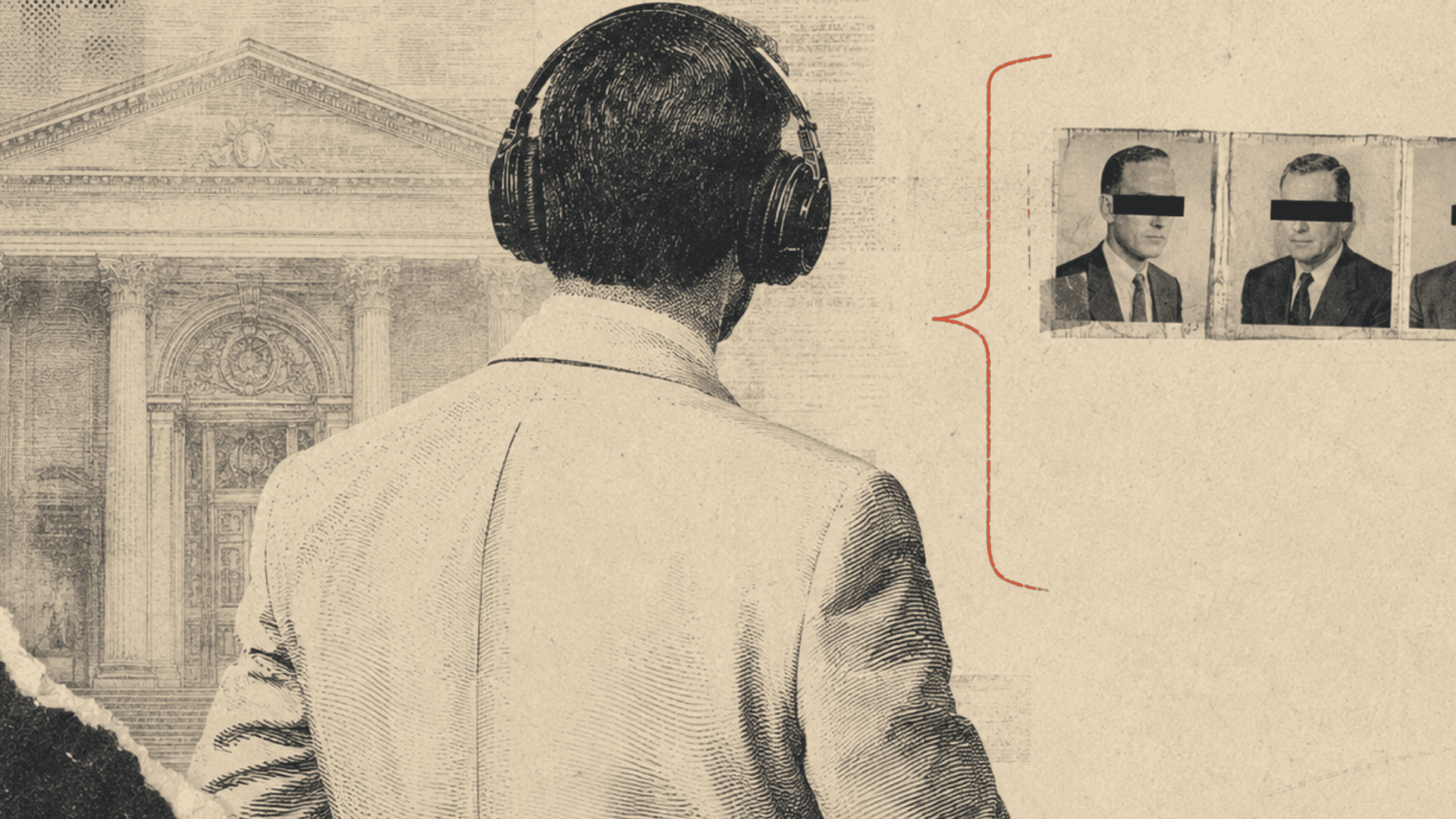
Andy Beal sat at the poker table in a white suit and bulky black headphones, speaking only to announce his bets. D Magazine described him dressed that way for four days, playing as much as fourteen hours a day. At the rail of Bobby’s Room, another day of the “Corporation Wars” was beginning.
It was 2004, and Beal had been coming to the Bellagio for three years. He walked in alone each time, challenging the best poker players on earth to heads-up matches. The pros had formed a collective bankroll they called the Corporation. They were by any measure the best players in the world, with dozens of World Series bracelets between them and decades of dominance in the highest cash games Vegas could offer. Doyle Brunson, Phil Ivey, Jennifer Harman, Howard Lederer, Ted Forrest, Chip Reese, Todd Brunson, Johnny Chan, Chau Giang, Gus Hansen. They took turns playing him in shifts. The stakes had started at $10,000/$20,000. Now they were at $100,000/$200,000.
You could tell when Beal was in town: at the Bellagio’s highest-stakes table, a crowd of professionals would form around two players pushing chips worth $10,000 each. The banker from Dallas against whoever was taking their turn for the Corporation that day. Beal believed he was better than most of the pros. Like Goldstein, he felt heads-up poker suited his style. He also had a specific strategy for the Corporation: to set the stakes so high that it made the pros uncomfortable. They could not afford to lose; for Beal, the money was pocket change.
Beal had dropped out of college twice, first from Michigan State, where he had been studying mathematics, and then from Baylor. He counted cards at blackjack tables until the casinos barred him. But the real apprenticeship was in property. At nineteen, he bought a house in Lansing, Michigan, for $6,500 and rented it out. At twenty-three, he bought a federal property at auction in Washington, D.C., for $217,500 and sold it three years later for more than a million dollars. Those early property deals led from a $6,500 house to a bank bearing Beal’s name and a financial business managing more than $22 billion in assets.
In 1988, he founded Beal Bank in Dallas with $3 million in capital and one branch in Carrollton. During the Texas savings-and-loan bust, he scooped up cheap defaulted loans from the Resolution Trust Corporation. After September 11, he bought aviation bonds that other investors were avoiding. During the 2004–2007 bubble, while other banks gorged on subprime loans, he all but stopped lending. After the 2008 collapse, he bought failed banks.
He was a master of taking on risks that others shunned, including with his taxes. His use of an aggressive tax shelter, known as “Son of Boss,” made headlines and, after a decade of litigation, cost him roughly $70 million in back taxes and penalties for a single year.
It barely registered. By 2025, his net worth would exceed $12 billion.
Beal was also a polymath. He had formulated a number-theory conjecture and funded a $1 million prize, administered by the American Mathematical Society, for anyone who could prove it or produce a counterexample. After sinking $200 million of his own money into a private rocket company, he shut it down in 2000, years before SpaceX, blaming subsidized government competition. He spent the years that followed honing his backgammon game and learning to race stock cars.
Then he found poker, wandering into Bobby’s Room at the Bellagio during downtime on a business trip to Vegas. Starting in 2001, he began returning regularly to Vegas for high-stakes matches. What started as a diversion became an obsession. Beal did not see it as a gamble; he saw it as a problem he could solve.
“I’m not much of a risk taker,” he told D Magazine, which interviewed him about his rocket company. “I just take situations that people perceive to be high risk, and I decide that they can be managed to low risk. I’m really very conservative.”
Beal hired a poker tutor and converted his office into a poker room that mimicked the ambience inside the Bellagio. He practiced with a device strapped to his leg that would vibrate every eight seconds and prompt him to make his play. By waiting for a vibration before acting, he made his timing harder for opponents to read.
He eventually informed the pros that he was willing to play for some of the highest stakes ever, and they agreed to pool their money and take him on. One at a time, the Corporation’s members would tag in and out of the match. Beal never left or brought in a sub. It was just him. He initially lost, dropping $4 million in his first few sessions, but he kept practicing and studying.
D Magazine reported that Beal finished the four-day May 2004 visit $10 million ahead. The pros had taken him on in shifts; he left for his twin daughters’ camping trip.
In February 2006, Beal returned to Las Vegas to play the Corporation at the Wynn. One morning during that visit, he sat in a corner of the poker room and told Michael Craig, author of The Professor, the Banker, and the Suicide King: “I’m losing my enthusiasm. I’m missing my family.” He added: “It’s absolutely not the day I should be playing.” Craig reported that Beal lost $1.2 million in the next seventeen minutes.
Beal finished that week down $3 million and flew back to Texas. His representative, Craig Singer, announced that he was done with poker. Six days later, on February 11, he flew back to Las Vegas. Over four days he took the Corporation’s entire $10 million bankroll, and they sent in Phil Ivey. A stone-faced prodigy who had climbed the poker rungs from Atlantic City to Bobby’s Room, Ivey was the Corporation’s last hope. And he delivered. Over three days, Ivey won $16.6 million.
Yet Beal couldn’t stay away from poker entirely.
By 2020, nearly twenty years after first walking into Bobby’s Room, Beal was still playing. He was more selective about opponents now. He no longer issued open challenges, and liked to keep the matches private. But for the right player, at the right stakes, he would still sit down.
Tang Hao, the Hong Kong billionaire, played Beal at a château in the south of France. Beal drew a global circuit of players who understood what he represented: a man who would keep coming back.
Tom Goldstein knew all of this. He had been paying attention all along; in September 2017, a week after Safai had taken him for $6 million, he was texting Salomon about getting a game with Beal. Then the money ran out. To set the trap, he needed a way in.
* * *
In December 2019, Beal had played Tobey Maguire heads-up in Dallas and lost $15.6 million, half of it owed to Maguire personally. When the time came to pay, Beal balked. He proposed a settlement for significantly less. Maguire refused and, in 2020, retained Tom Goldstein to collect.
“Tobey Maguire had played Andy Beal and beat him for a lot of money, and then Andy wanted a discount on that,” Goldstein testified. “Tobey asked me to represent him to — if he needed to, to sue Andy, but to persuade Andy to pay.”
In August 2020, Goldstein emailed Beal’s lawyer and referenced the possibility of a lawsuit.
But the Maguire matter was unfolding in parallel with Goldstein’s own. Two months later, in October, IRS agents sat him down and questioned him about his finances, his gambling, his debts. He knew they were investigating him. He kept working the Maguire case anyway. Negotiations continued. On June 4, 2021, Beal wired $7,815,000 as full payment. Goldstein earned a $500,000 legal fee.
That fee was the $500,000 Goldstein routed to Bob Safai instead of his firm. Prosecutor Sean Beaty would later call it “the clearest example of diverting income there could be.” The $500,000 was taxable income to Goldstein whether it landed at his firm or at Safai’s bank; sending it to Safai kept it off the firm’s books and off his tax return.
But now Goldstein was on Beal’s radar. A year after forcing Andy Beal to pay $7.8 million he didn’t want to pay, having threatened to sue him to get it, Goldstein would be sitting across a table from him. At trial, Goldstein’s defense lawyer made sure the jury understood the timeline.
“I just want to be clear, that would be after your interview with the IRS in October of 2020?”
“Definitely.”
* * *
The two men met in Costa Rica. In March 2022, Big Al DeCarolis, a veteran gambler who had first encountered Goldstein years earlier at a private game in Dan Bilzerian’s home, hosted a poker trip at his property there. Beal came. So did Robl, Eddie Ting, and a handful of others.
DeCarolis introduced them over sunset cocktails on the first evening; they had never met in person. During the trip, Beal played heads-up with Marcus Ryu, a software entrepreneur. Goldstein mostly watched and tried to attract Beal’s attention.
Goldstein brought four of his girlfriends with him to Costa Rica.
“He found this to be the most interesting thing in the world,” Goldstein told the Times. “That was on purpose.”
Beal did not testify at trial, but the stipulated facts and Goldstein’s own testimony described what happened next. In the months after Costa Rica, Goldstein proposed a heads-up match. Beal agreed to play.
Goldstein went to Texas for the games and rented an apartment near Beal’s home. He had done the same in Beverly Hills before playing Gores: living nearby let him stay available for the next session.
The operation around Beal was larger than anything Goldstein had assembled before. Rick Salomon, who had staked Goldstein against Gores in 2016, took twenty percent. In May 2022, Goldstein texted him that Beal had capped his losses at $15 million. Salomon agreed and offered one piece of advice: “Don’t bluff too much.”
Robl took a stake too. Keith Gipson, who had trained Goldstein for the Gores matches, coached him again for Beal.
Asked at trial why he had invested in Goldstein, Salomon laid out the thesis: “I think he’s a better poker player than [Beal] and with a way better upside, so we could risk five million and win 20 or [risk] five million and win 30. Something of that type.”
* * *
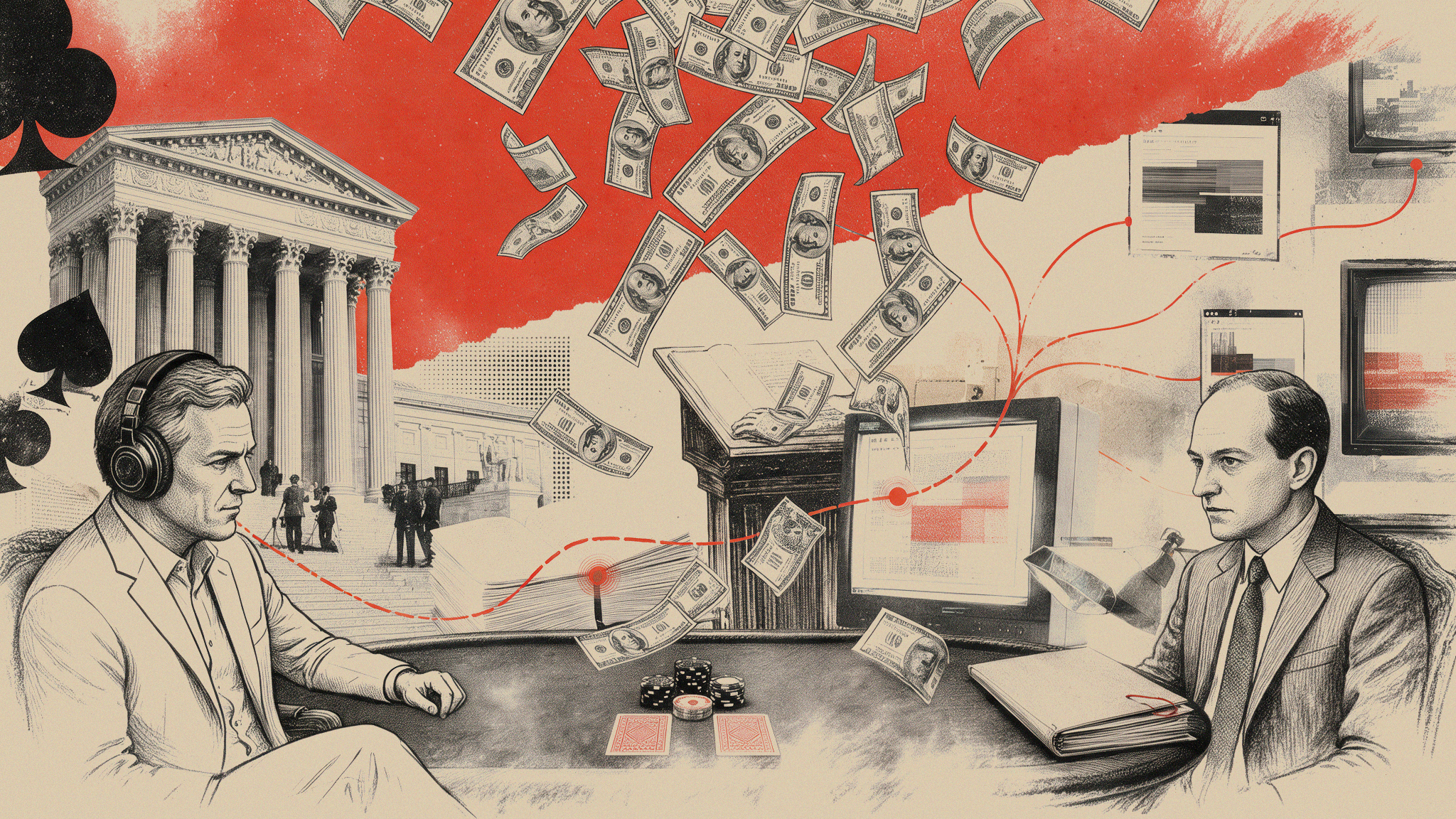
The dated payments record part of the campaign, which continued into May 2024. The payment schedule both sides stipulated at trial covered only 2022. The first receipt listed was $15 million on May 24.
Describing heads-up play, Goldstein told the Times: “You can imagine people who are just super, super focused. They’re not chatting. There’s me, there’s the dealer, there’s them and, you know, somewhere between two and 20 hours of pretty stone silence, except for the bets.”
Twenty hours. Goldstein was past fifty and Beal nearly seventy. They played in Dallas with no audience, cameras or commentary.
Goldstein paid Beal $5 million in June 2022. No July payment appears in the stipulation.
August: two payments from Beal, $2.8 million and $185,000.
October: $6.9 million received on the 3rd, $6.9 million paid to Beal two days later, then $5.4 million received on the 14th.
November: $1.9 million and $8.3 million.
A separate payment schedule records the later receipts.
February 2023: $7.5 million.
The last listed payment, May 2024: $9.8 million.
Over two years and a dozen or so matches, Goldstein won roughly $50 million from Beal.
After paying his investors, Goldstein’s share from Beal came to approximately $15 million. He had sold roughly seventy percent of his action, but even his share, from one opponent over two years, was the score of a lifetime.
* * *
In March 2023, Goldstein retired from his own law firm.
His departure was publicly reported on March 1, 2023. Cases were reassigned midstream. Kevin Russell, his longtime partner, would later testify that Goldstein was a very smart man who played poker for money. Russell knew that much. Russell had worked alongside him for more than a decade. He did not know that his partner was spending weeks in a Dallas apartment, playing silent poker marathons against a billionaire banker.
The firm had been Goldstein & Howe, then, during the four and a half years Goldstein spent as a partner at Akin Gump — from May 2006 through the end of 2010, co-heading its Supreme Court and appellate practice — Howe & Russell, then Goldstein, Howe & Russell, then Goldstein & Russell. Goldstein was the constant, the firm’s rainmaker. Now it would carry on without him.
Why did he leave? At trial, Goldstein offered the jury one version: “I had done the same thing for a quarter century. Had kind of gotten what I could out of it. The kinds of people that I represented in the Supreme Court tended to be the little guy. The court was getting much more conservative — not just conservative, much more conservative, with the new appointees, and I had opportunities when it came to, you know, playing poker.”
For a lawyer whose practice had been built on the little guy, a Court moving right meant fewer wins and less reason to keep counting them. He gave the Times another explanation: “I was beating him and that was just a way more interesting life.”
It was Andy Beal — the man whose money was replacing everything Goldstein had built over twenty-five years of law.
On cross-examination, prosecutor Sean Beaty confronted Goldstein directly about his public comments and his ultimate endgame.
“You told the New York Times reporter that poker represents the route to your salvation?” Beaty asked.
“Yes,” Goldstein replied.
“Your plan is to milk Andy Beal for a quarter billion dollars for the rest of your life?”
“I hope to beat him for that,” Goldstein said.
A quarter billion dollars, from one man: By his own account, the plan was to play Andy Beal, forever.
He would later speak of Beal as a man like himself. Both were self-made. Both had been high school debaters and believed they could make risk manageable. Beal had fought the IRS for a decade over roughly $70 million connected to his “Son of Boss” tax shelter structure, but in the end he paid. Goldstein was still trying to earn enough to cover obligations built up over years.
Goldstein’s lawyer asked how the Beal games had gone.
“I won,” Goldstein said, adding that he used the proceeds to pay his back taxes and was completely paid up by the end of 2022.
By May 2024, the IRS agents who had questioned him in October 2020 had been at work for more than three years. Goldstein had won the money. But the government wasn’t finished with him.
With additional research from Owen Scheck
For background and source context, read our guide to Tom Goldstein, poker and the Supreme Court.
To be continued in Chapter 9: The Stream
Chapters 9 and 10 arrive tomorrow, Thursday, 24 September. Subscribe free for an excerpt and a link to each new instalment, delivered directly to your inbox.
Only new stories and instalments from The Foundry. No unrelated promotions. Unsubscribe any time.