
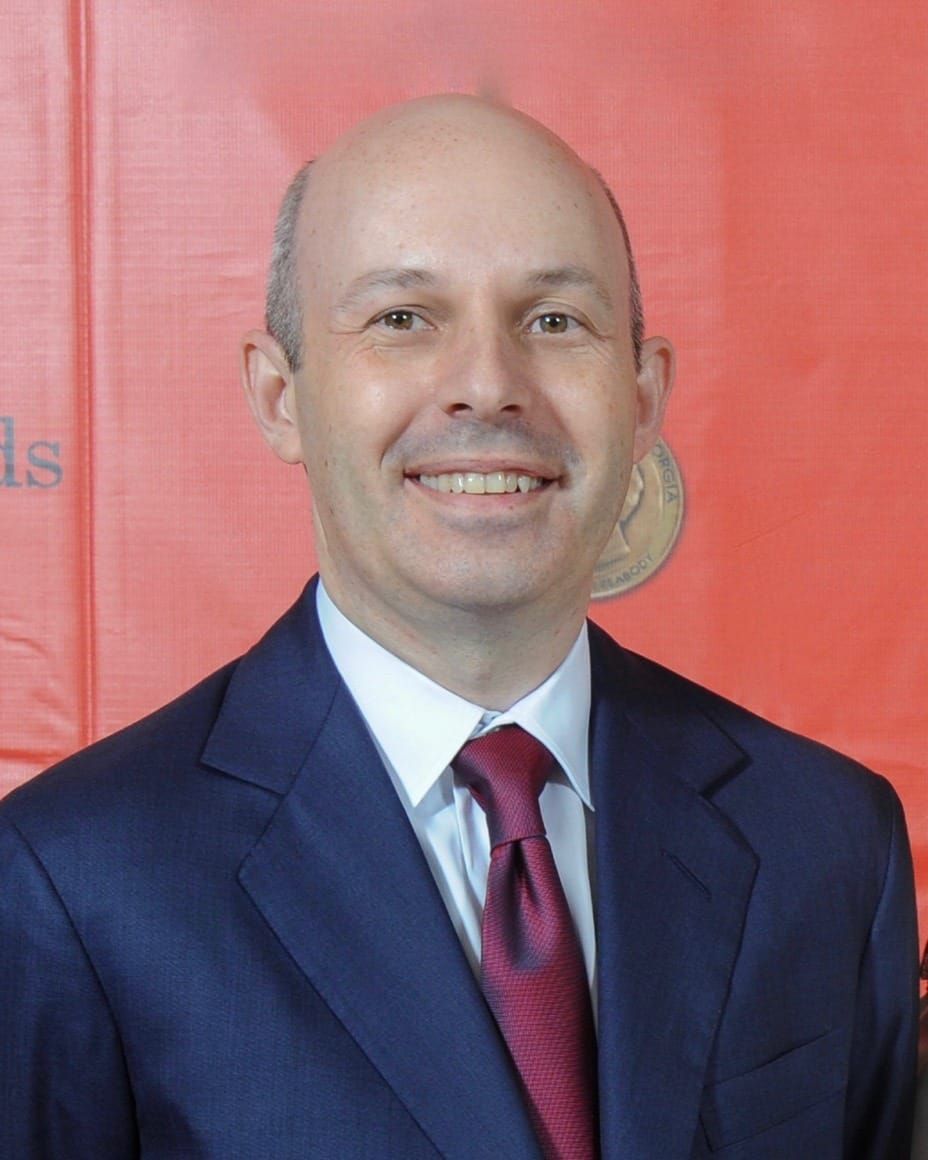
Tom Goldstein at the Peabody Awards in New York, May 20, 2013. Photo: Anders Krusberg / Peabody Awards, via Wikimedia Commons. CC BY 2.0. Cropped from the original.

A READER’S GUIDE TO THE TELL
Tom Goldstein built a career arguing before the U.S. Supreme Court while pursuing a second life in high-stakes poker. The Tell, Bradley Hope’s eleven-chapter series for The Foundry, follows him between those worlds, beginning with a Las Vegas game in which he repeatedly bet without looking at his cards.
This companion introduces the first four chapters and the records behind them. It is a starting point for the series, not a substitute for the full account.
Free to read. No email address required. Chapters 1–4 available now.
Who is Tom Goldstein?
Thomas C. Goldstein is a Supreme Court lawyer and co-founder of SCOTUSblog. Chapter 2 of The Tell follows his unconventional entry into Supreme Court practice: finding disagreements between federal appeals courts, contacting lawyers with cases the justices might hear, and offering to take them on.
His first Supreme Court argument was Cunningham v. Hamilton County in April 1999, according to The Tell. The published court opinion records him as counsel for the petitioner, gives the argument date as April 19, 1999, and records the decision on June 14.
Goldstein and Amy Howe launched SCOTUSblog in 2002. The second chapter traces the blog’s emergence as an influential source of Supreme Court coverage, alongside Goldstein’s growing legal practice.
Why does his poker playing matter?
The opening scene of The Tell takes place at the Bellagio in July 2008. Goldstein’s aggressive betting drew spectators and unsettled opponents who could not always tell whether he had even seen his cards.
The chapter draws on a contemporary TwoPlusTwo forum account by a player posting as 88Orange, alongside Goldstein’s later account of the night. Read the opening chapter for the scene and its attribution: an account from someone at the table is different from a later recollection of the session’s total winnings.
From Las Vegas, the story moves to Goldstein’s testimony at his federal trial in Maryland in February 2026, then back to the beginnings of his legal career. It follows the tension between his public reputation and his appetite for poker.
Start with the published chapters
Chapter 1: The Unknown Player
An unfamiliar player takes over a Bellagio poker game. Years later, the same man takes the witness stand in a federal courtroom. Read Chapter 1.
Chapter 2: The Outsider
Goldstein finds his way into Supreme Court practice and builds SCOTUSblog with Amy Howe. Read Chapter 2.
Chapter 3: The World
Goldstein moves from Washington poker nights into high-stakes private games, where his legal practice and gambling increasingly overlap. Read Chapters 3 and 4.
Chapter 4: The Gatekeeper
A legal client, Paul Phua, opens the door to richer games. Goldstein assembles a team to study his opponents. Read Chapters 3 and 4.
Read Chapters 1 and 2 in the opening installment, then continue with Chapters 3 and 4. All eleven chapters are free. The published schedule adds two chapters each day from September 21 through September 24, followed by the final chapter on September 25, 2026.
Records behind the story
The Cunningham court opinion is a public record of the case, counsel, argument date and decision discussed in Chapter 2. It does not establish the surrounding biographical scenes; those belong to the reporting and attributed accounts in The Tell.
The series is written by Bradley Hope, with editing from Brad Reagan and additional research from Owen Scheck. The full narrative carries the reporting; this guide covers the first four chapters.
Guide checked against the published chapters on September 21, 2026.