
Sep 24, 2026
15 min read
Welcome back to The Foundry, the new digital magazine from Brazen. We’re interested in extraordinary characters and the worlds they inhabit: their ambitions, their contradictions and the choices that change their lives. We’ll often publish their stories in parts, in the spirit of the old magazine serials. No fancy gadgets or video clips, just the story, presented as we’d like to read it.
We’re beginning with The Tell. All eleven chapters are free, and you don’t need to give us your email address to read them. If you’d like each complete edition delivered to your inbox, please subscribe. You’ll also hear about future Foundry projects, including a Vatican scandal and a nuclear history project with new discoveries.
We hope you enjoy it, and that you’ll stick around for what comes next.
More from Brazen: investigative reporting at Whale Hunting, long-form narrative podcasts at Brazen FM, and updates on Instagram.
Below are Chapters 9 and 10. The final chapter appears tomorrow, on Friday, 25 September.
New to The Tell? Start with Chapters 1 and 2, or catch up with Chapters 3 and 4, Chapters 5 and 6, and Chapters 7 and 8.
Chapter 9: The Stream
By Bradley Hope
With editing from Brad Reagan
In the spring of 2024, the IRS had been on Goldstein for six years, its special agents for nearly four. Federal agents had interviewed Rick Salomon and Paul Napoli. By summer, prosecutors from the Justice Department’s Tax Division would join the IRS agents in the interview room. A grand jury was being prepared. The law firm was losing money. The Beal campaign was in its last weeks. The debts remained.
Amid all that chaos, Goldstein made an unconventional choice: He flew to Los Angeles to play poker on television.
The Crystal Room at the Hustler Casino in Gardena, California, had been a high-limit poker room until nearly a million dollars was spent converting it into a television studio. Larry Flynt, the porn magnate who for years hosted a private high-stakes game at the casino, approved the project before he died in February 2021. Cameras covered the room. RFID readers embedded in the felt tracked the cards, feeding graphics that showed the audience each player’s hand. The felt glowed green on screen under the production lights.
Hustler Casino Live launched in August 2021, co-founded by Ryan Feldman, a former ESPN researcher, and Nick Vertucci, a real estate investor who played poker. By May 2024, the show had the feel of a major-league sports broadcast, with commentary running over the action.
The show’s flagship was the Million Dollar Game: multi-day, six-handed, with a million-dollar minimum buy-in. Day 3 was May 30, 2024. The blinds were $500 and $1,000, with an extra $2,000 ante posted by the big blind each hand. About thirty thousand people were watching the live YouTube feed.
Five of the six seats were filled by known players. Steve Swedlow, a former trial lawyer and Quinn Emanuel partner who became a Cook County judge in Illinois, bought in for $1 million. Alan Keating, a popular high-stakes livestream regular, sat with a stack worth $1.3 million. Brandon Steven, a Wichita car dealership magnate who played in ultra-high-stakes private games, bought in for nearly $1.5 million. Michael “Texas Mike” Moncek was there, as was Tom Dwan, who had lost heavily on Days 1 and 2 and was trying to recover. The table held more than six million dollars in chips.
The sixth player was listed on the graphics as “Thomas.”
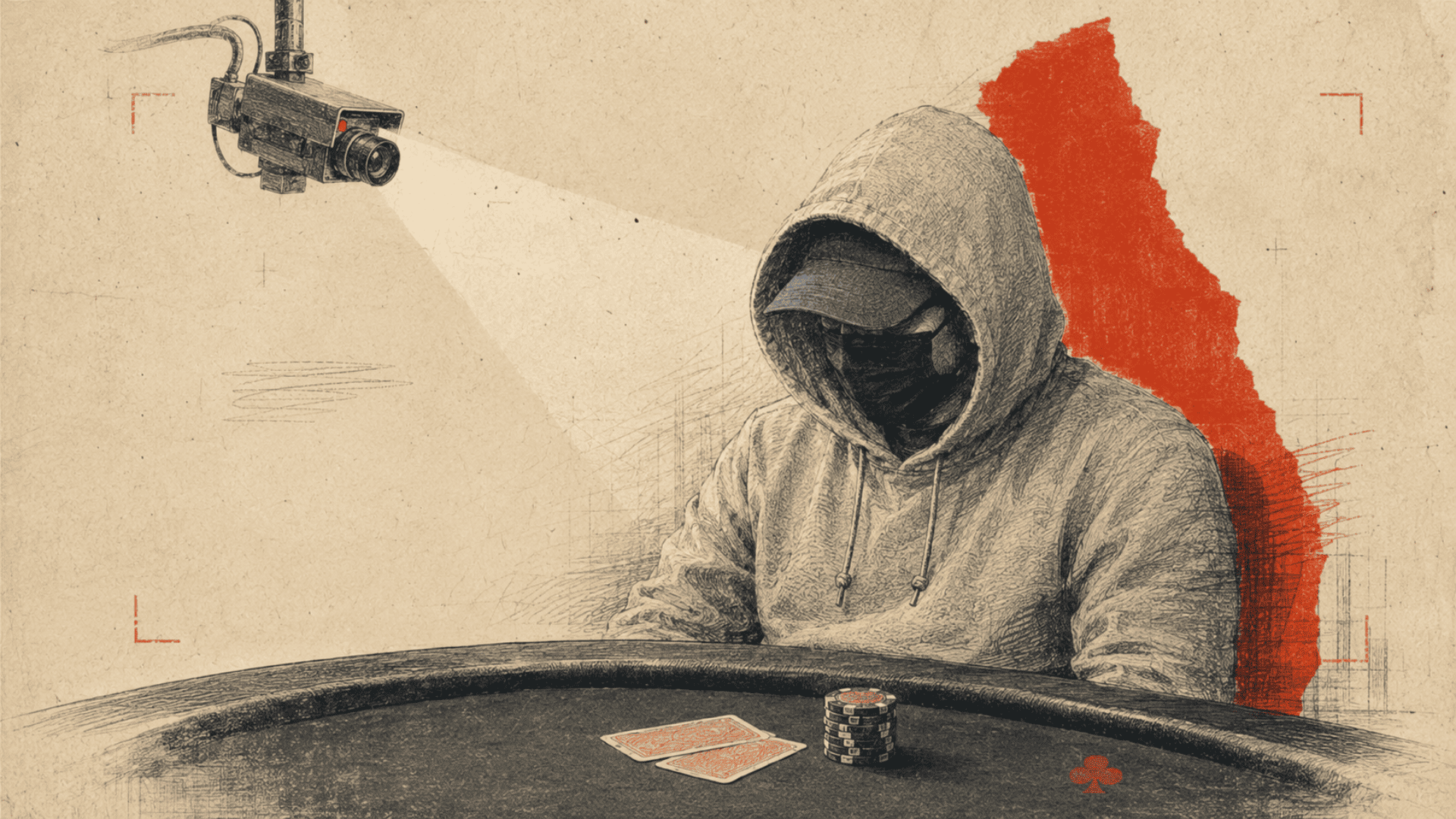
Hustler Casino Live had promoted a special guest for Day 3. This player wore a gray hoodie, hood up, with a black medical mask covering everything below his eyes. A blue baseball cap reading “Sverige” — Swedish for Sweden — sat low over the hood. Presented to the audience as a European businessman, he apparently had never appeared on HCL or any other poker stream. Speculation in the live chat ranged from Elon Musk to MrBeast. “I kept expecting the ‘special guest’ to take his mask off,” one viewer wrote. “Guess he really was just nobody and scared to catch covid from millionaires.”
David Tuchman, calling the action from the commentary booth, would later say he had no idea who the mystery player was. “I thought it was very obvious,” Tuchman told Washingtonian, “that he also didn’t want anybody to know who he was.”
From the opening hands, Thomas played loose and wild. He four-bet with weak hands and shoved into pots.
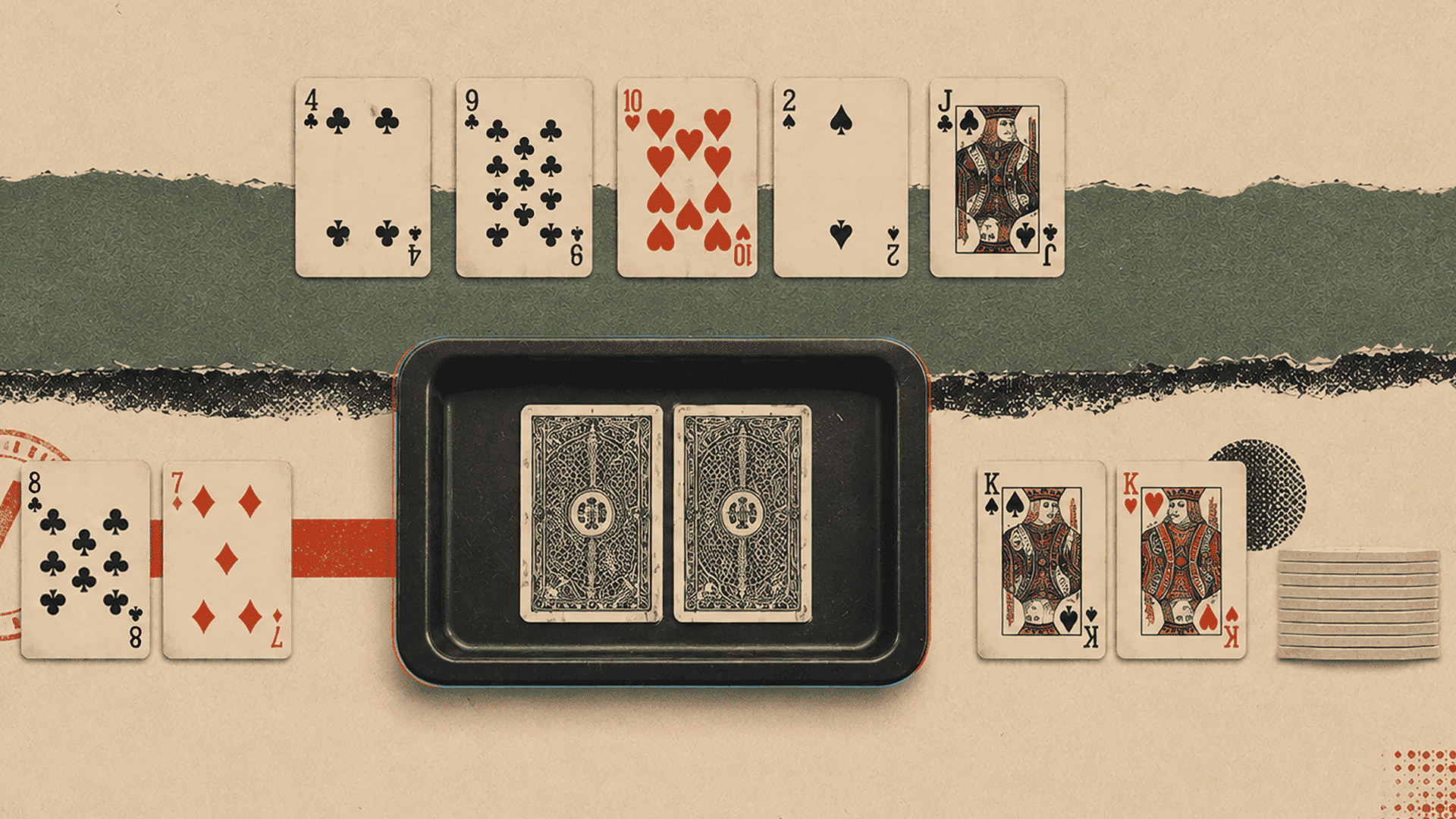
Moncek opened to $4,000 from the hijack with queen-nine of hearts. Dwan called with pocket fives. Thomas called on the button with the eight of clubs and the seven of diamonds. Swedlow three-bet to $22,000 from the small blind with pocket kings, the second-best starting hand possible in the game. Keating called from the big blind with ace-three of hearts, and the other three came along. There was $112,000 in the pot before the flop.
The flop came four of clubs, nine of clubs, ten of hearts. Swedlow checked his overpair, his kings still higher than anything on the board. Keating checked. Moncek bet $56,000 with middle pair. Dwan folded. Thomas called with an open-ended straight draw; any jack or six would complete it. Swedlow called with his kings. Keating folded. Three players remained, with $280,000 now in the pot.
The turn, the fourth shared card, was the two of spades. It helped no one. Swedlow bet $1,000 into the $280,000 pot, the absolute minimum. Tuchman chuckled. Moncek called. Thomas called. The pot was now $283,000.
The river was the jack of clubs. The board read four-nine-ten-two-jack, with three clubs showing. Thomas held the eight of clubs and the seven of diamonds. His seven-eight-nine-ten-jack straight was the best hand at the table. The thirty thousand viewers at home could see this on the hole-card graphics. The players at the table could not.
“And there you go,” Tuchman said on air. “Thomas has just made the straight.”
Swedlow checked. Moncek checked. The action was on Thomas. The logical move was to bet for value, to get as much money as possible from players with worse hands.
Thomas bet $130,000.
Swedlow considered it. He held pocket kings, an overpair. He called. Moncek folded.
Thomas needed only to turn his cards face up to collect the half-million-dollar pot. Instead he left them face-down, pushed them toward the dealer and pointed at Swedlow, conceding the hand. Once the cards entered the muck, his hand was dead. Swedlow showed his kings and took the $543,000.
Thomas sat perfectly still, arms crossed, looking down at the felt. He did not speak or show any visible emotion.
“Whoa!” Tuchman said from the booth. “Thomas folded! I’m not sure if he misread his hand? Or he thought he was bluffing?” He noted the pointing gesture. “Clearly thought he was bluffing because he pointed to his opponent right away.”
A long pause. “What just happened?”
Swedlow put his hands on his head, smiling. “I didn’t even see his—” He would later say he kept replaying it. “I was still daydreaming about the hand I won, I was so happy. Replaying how good I was, you know.”
Keating leaned toward Swedlow. The hand would later be watched by hundreds of thousands of people, and a player folding the winner on camera could invite suspicion of collusion or a fix. The images alone established neither. “Not a good look for our game, Steve,” Keating said.
Swedlow, the former lawyer, agreed. “It’s not a good look,” he said, “for anybody in the whole world.”
Thomas sat silent. The table was quiet. The dealer shuffled and began pitching the next hand.
The show’s official social media account posted minutes later: “WTF JUST HAPPENED?!? Thomas rivers a straight, bets river, gets called, then mucks?!? In a $543,000 pot!!” Feldman, the show’s co-founder, told PokerNews: “It is highly doubtful that the graphics were wrong, although it is possible. It is more likely that he misread his hand or the board. It is not the first time that this has happened on our show.”
Tuchman had a more specific theory. Thomas held the eight of clubs and the seven of diamonds. Three clubs had come on the board, and Thomas had only one in his hand. He had bet $130,000 on the river representing a flush he did not have. He was bluffing. But he also had the winning hand.
“I imagine Thomas thought he was bluffing clubs,” Tuchman said, “and was so hyper-fixated on the clubs and the fact that he’s trying to represent that, he forgot that he actually had the straight.”
If Tuchman was right, it was an amateur’s mistake, made by a man who had taken tens of millions off some of the richest men on earth.
Thomas finished Day 3 down $1,112,000. He returned the next day and lost another $1,619,000. “For two days,” a World Poker Tour writer observed, “the graph of ‘Anonymous Thomas’ goes straight into the ground.” Across both Million Dollar Game sessions, roughly sixteen hours under the cameras, he lost $2,731,000.
Rick Salomon, who had played with him for years in private games, later spoke to Michael Kaplan of Card Player about Goldstein’s appearance on the Hustler stream. “I guess he loves poker more than anybody I’ve ever seen,” Salomon said, “and he just wanted to play.”
Chapter 10: The Trial
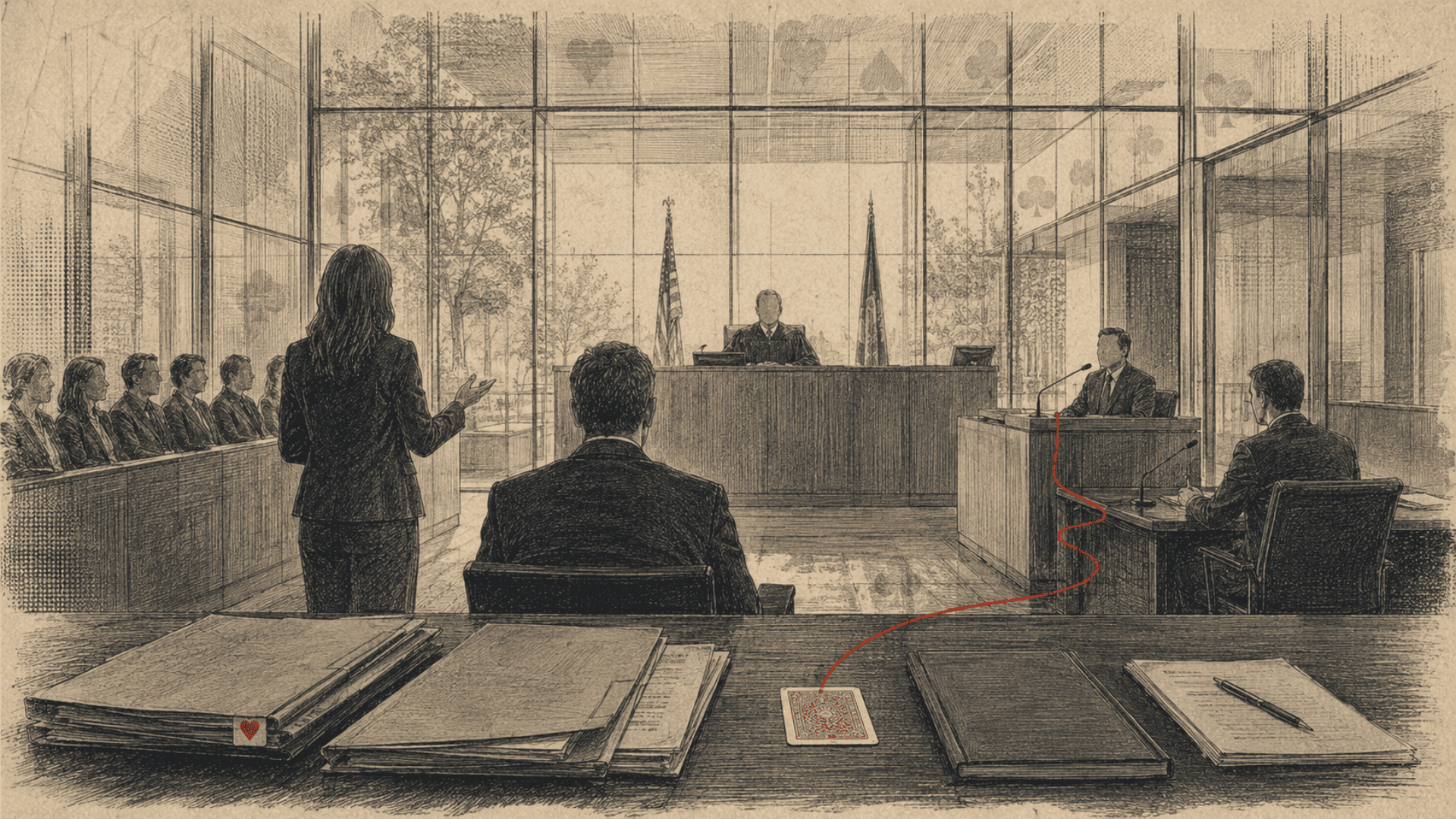
The trial of Thomas C. Goldstein began on January 12, 2026. The original indictment contained twenty-two counts; sixteen went to trial. The government had dropped, among others, two counts involving a woman on the firm’s payroll. The remaining charges were tax evasion, aiding the filing of false returns, willful failure to pay and false statements on a mortgage application. On Day 4, Hayter Whitman, one of the four prosecutors, stood before the jury and delivered the opening statement. He did not raise his voice.
Stephany Reaves delivered the defense opening. She introduced the rest of the team from Munger, Tolles & Olson and laid out the argument that would carry the next six weeks of trial. Goldstein had won millions at poker. He spent lavishly. accumulated debts and bought a house. “That is all true,” Reaves told the jury, “but none of it was a crime.”
Reaves said the calculation required more than a total of poker wins. It depended on losses, shares owed to backers and when the money was received, which might be later than the year it was won. “The evidence is going to show that the government just doesn’t have that right,” she said. “They were never looking for the correct calculations.” She told the jury that Goldstein had proactively contacted his accountant, Walter Deyhle, at the end of 2016 to report his gambling winnings. “Someone who was trying to evade taxes doesn’t reach out to their accountant and tell them about it for the purpose of reporting it.”
Then she held up the government’s own numbers. One of the charges accused Goldstein of hiding $263 in bank account interest from a poker account. At the highest tax rate, that came to less than $100. In the same year, Goldstein had reported owing almost $2 million in taxes. “There’s no way he was hiding $263,” Reaves said. The government’s charges included unreported interest from the account in three tax years: 2016, 2017 and 2018.
The investigation itself, Reaves argued, had been built on a conclusion. “The government spent almost seven years on a massive investigation into every aspect of Mr. Goldstein’s personal and professional life,” she said. Reaves argued that the office managers had gathered the documents and the accounting firm had prepared the returns, but the accountants had failed to ask the right questions. She said the jury would hear no evidence that Goldstein had directed anyone to lie on a return, misclassified a transaction or tried to hide income. “The government assumed, years ago, that Mr. Goldstein was guilty. And they have been trying to prove that ever since.”
Over the first week, the government began building its case. Alec Gores flew in from Los Angeles to testify. He said Goldstein had asked to keep their games private “because he was a lawyer representing the White House, I suppose.” After losing to Goldstein, Gores learned about the people observing the games and backing the play. He told the jury he was “crushed” to discover that Goldstein had lied to him about them.
Tobey Maguire took the stand on Day 8. Goldstein had collected $7,815,000 in poker debts that Andy Beal owed the actor, wired in June 2021. Goldstein had also asked Maguire to send his $500,000 legal fee not to the law firm’s bank account, where the accountants and office managers would have seen it, but directly to Bob Safai, to pay down his own poker debt. Accountants and IRS agents followed, describing numbers that did not reconcile and interviews Goldstein had been given chances to correct.
Rick Salomon adjusted his position at the microphone. He appeared at ease as he began describing the gambling world he knew. He had played with Goldstein in the big cash games and in private sessions. Goldstein had sent him text messages asking about meeting Salomon’s former wife Pamela Anderson, by then starring in Chicago on Broadway, and Paris Hilton.
The defense tried to exclude those texts as “cumulative and prejudicial.” Jonathan Kravis, Goldstein’s attorney, asked Salomon on cross-examination: “Is he one of those people obsessed with celebrities?” Salomon said no.
The prosecution asked Salomon about the offshore games. Playing whales in Asia, he said, usually meant going through Paul Phua, and Phua took a piece. Phua had been identified in the indictment as “Foreign Gambler-3.” A text message from 2016 was entered into evidence. Goldstein had written to Salomon about getting money from Hong Kong: “Because I have the money in HK and Robl can get it.” The message had been sent while Goldstein was securing backers for the Gores games. On cross-examination, Salomon said Phua might have been holding the money for Goldstein, or it might have belonged to Phua. He did not know.
Then Hayter Whitman asked Salomon a simple question.
Had he ever inflated his poker losses to reduce his taxes?
“No,” Salomon said.
“Why not?”
“Could get in trouble.”
The courtroom was quiet. Salomon had left school in the seventh grade. By his own account, he had been a drug addict, spent a year in rehab and been sober for seventeen years. He lost money in low-stakes games and played for tens of millions in high-stakes ones, while keeping records and paying his taxes.
Katie Bart took the stand later that same day, testifying under immunity. She had managed Goldstein’s law firm, handling its books and accounts and coordinating with its accountants. She had discovered the Wells Fargo poker account Goldstein had kept hidden from those accountants and had found records showing payments diverted from the firm’s business account to his personal gambling account.
She had announced her resignation in October 2020 but was still working with the firm in January, helping train her replacement.
At trial, Bart read a message she had sent on January 21, 2021, to Jon Levitan, the firm manager who preceded her: “He’s losing it. This tax stuff must be getting to him because he keeps offering me money.” Asked what she had listed in the next message, she said: “Bitcoin, student loan payments, a 10K bonus when a big case comes in, expensive headphones.” She could not say whether an offer had been made that day or she was telling Levitan about it later.
Asked whether she had thought one reason for the offers was to make her less likely to cooperate with the IRS investigation, Bart said: “Yes. That crossed my mind.” The offers had made her uncomfortable. She had managed his calendar, his travel, his cases. She knew how meticulous he was about legal work, how he would spend weeks perfecting a single brief.
Before Bart took the stand on Day 9, IRS Special Agent Quoc Tuan Nguyen had described Goldstein’s cryptocurrency accounts, virtual private network and Proton Mail, the Swiss encrypted email service using what he called “zero-access encryption.” The prosecution presented these tools as evidence of secrecy. The defense pointed to centralized cryptocurrency exchanges whose records could readily be subpoenaed, and to Goldstein’s use of his law firm email account to send the same financial records.
Sarah Harrington took the stand on Day 11, for the government. An appellate lawyer who had worked in the Solicitor General’s office and argued before the Supreme Court, she had spent years at Goldstein & Russell and taught at the Harvard Supreme Court clinic Goldstein had founded. Emerson Gordon-Marvin, one of the prosecutors, began with how she was paid.
“How many times did you have clients pay legal fees to your own personal bank account?”
“Never.”
“How many times did you receive payment in cash for your legal services?”
“Never.”
“How many times were you paid in cryptocurrency?”
“Never.”
Then he asked about Goldstein as a lawyer. “As an attorney, he was a great attorney,” Harrington said. How many times had she seen him struggle with the details of a case? “I don’t recall ever doing that.” He had pioneered the practice of hunting for circuit splits, the questions on which appeals courts disagreed and the Supreme Court was most likely to step in, and offering to take those cases up; the Supreme Court bar, she said, “grew and became more specialized” as a result.
“Was this sort of a transformative intervention?”
“Yeah.”
Harrington’s testimony gave the government a comparison between ordinary legal payment practices and Goldstein’s transactions.
Kevin Russell, Goldstein’s law partner for more than a decade, had been the government’s witness too, on Day 5. Prosecutor Sean Beaty asked how sharp Goldstein’s intellect was. “He’s a very smart man,” Russell said, “a very keen intellect,” adept at picking things up quickly. On cross, Kravis noted the nice things Russell had said about his partner and drew out the rest: the effort and talent that had built the firm. The praise from Harrington and Russell gave prosecutors a response to the defense: they argued that someone so intelligent and careful in legal work could not have made the tax errors accidentally.
* * *
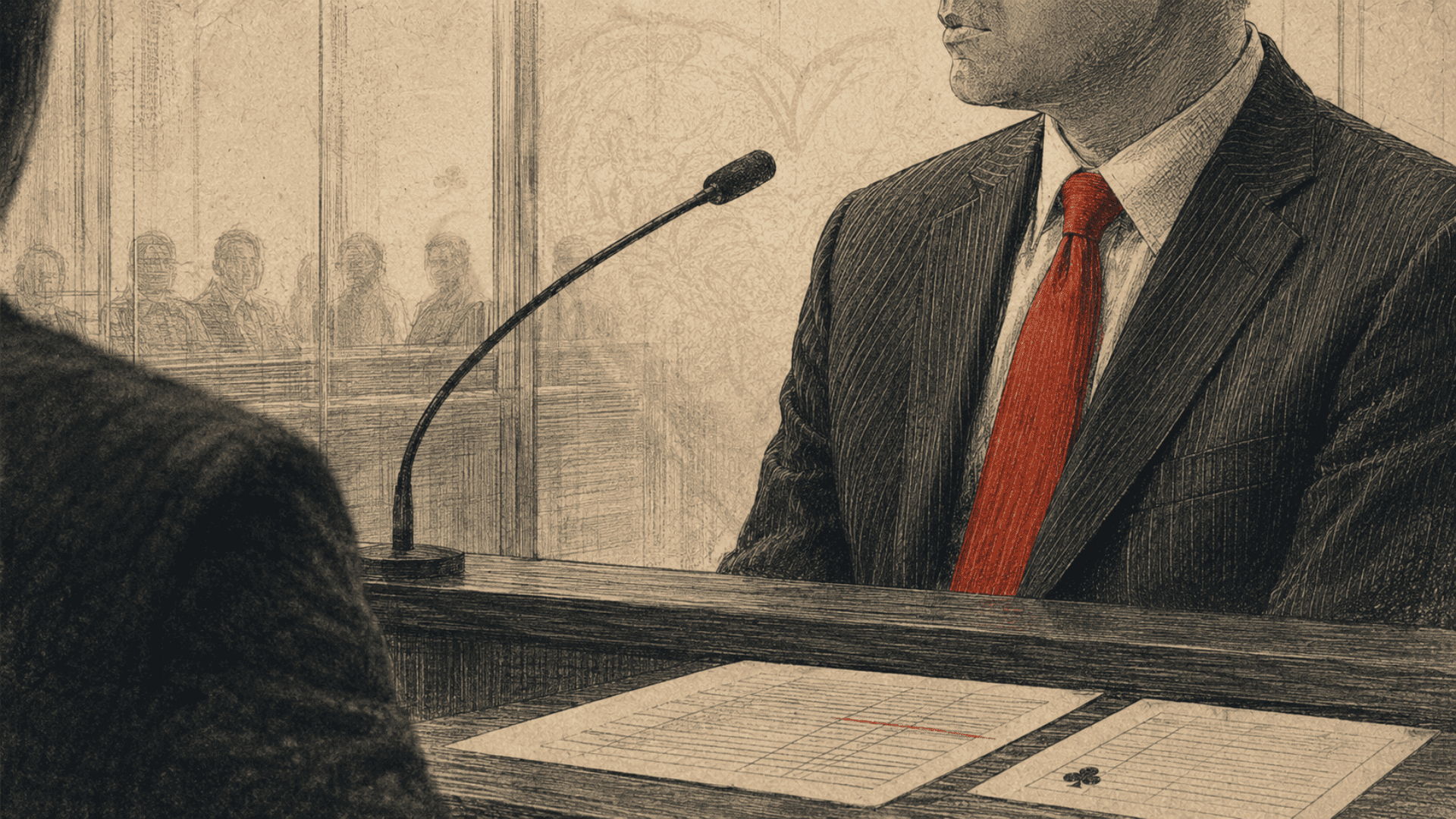
On Day 16, Goldstein took the stand. He wore a dark pinstriped suit and a red tie. The jury had spent weeks hearing how he won $26 million from a billionaire across five sessions, flew to Asia with bags of cash and played poker for twenty hours at a stretch. He had texted his backers “nine and two”: nine winning sessions, two losing. On the stand, Goldstein did not look like a man who had won tens of millions of dollars at anything. He looked like what he had been for the first two decades of his professional life: a very good lawyer.
His attorney, Kravis, opened the direct examination, the friendly questioning from his own lawyer, with four questions.
“Mr. Goldstein, did you cheat on your taxes in 2016?”
“No.”
“The other years we’ve been talking about in this trial, 2017, ’18, ’19, ’20, 2021, did you cheat on your taxes in those years?”
“No.”
“The jury’s heard about some statements in your tax returns that were not accurate. Did you cause those errors on purpose?”
“No.”
“Did you even know about those errors until this investigation started?”
“No.”
Goldstein answered calmly and precisely, with the confidence he had shown before the Supreme Court’s nine justices. A legal friend who attended the trial worried about how that composure might look to the jury. The friend told New York magazine: “He was so calm about it you wonder if the jury thinks that he’s some calculated dude rather than a guy who just fucked up and is getting overly punished for it.”
Goldstein walked the jury through the tax law, the staking arrangements, the loans from backers, the mechanics of the gambling journal he had maintained for years. He described his heads-up wins and his consistent, heavy losses in ring games. He explained why he had not reported winnings in 2017.
Goldstein said Deyhle had asked for a net figure and that he had supplied one: after the ring-game losses, it was zero or worse.
Kravis asked about the mortgage applications. Goldstein had left his gambling debts off the forms his wife co-signed. Why?
“I did not want my wife to know about the scope of my gambling debts,” he said.
Asked how he had done at high-stakes poker from 2016 to 2021, Goldstein was direct.
“I lost.”
“Is that in every year?”
“Yeah.”
“Even 2016?”
“Yeah.”
“Do you have a sense of how you’re doing lifetime as a high-stakes poker player?”
“Unfortunately.”
“What is it?”
“I think I’m down about ten million dollars.”
Goldstein’s heads-up record was real, a vast tally of winnings. His overall finances also included ring-game losses, staking debts and payments to backers and girlfriends. The “nine and two” tally described one successful campaign; it did not account for his other losses and payments.
He was asked about his responsibility for the tax returns.
Later, on redirect, Goldstein said: “There are mistakes in both directions because people make mistakes, and they are big ones.” He accepted responsibility for the taxes. “I may end up continuing to pay for those for a long time. That’s my responsibility.” He said that was different from having committed a crime.
Goldstein wanted the jury to distinguish mistakes from fraud, rather than conclude that he had doctored his journal to hide the truth. Goldstein believed the answer was obvious.
But so did the prosecutors.
Beaty stood up for the cross-examination.
“Mr. Goldstein, let’s see if we can agree on three things.”
“Okay.”
“Tom Goldstein is no dummy; right?”
“Okay.”
“You are smart?”
“Thank you.”
“Do you agree?”
“Okay.”
Beaty walked him through the credentials, one by one: law school, the bar, the briefs, the Supreme Court arguments. How many cases had Goldstein argued? Something in the mid-forties.
“Numbers matter; right?”
“Okay.”
“You know the difference between 27 million and 50 million?”
“Sure.”
“And you know the difference between 2.7 million and 12 million?”
“Sure.”
Then Beaty reminded Goldstein that, under questioning from his own lawyer, he had said he digs “very, very, very, very deeply” into his Supreme Court briefs.
“Four very’s?”
“I did not count. Numbers matter, but I did not count.”
Beaty was just getting started.
“You lied to your wife about your poker debts?”
“Yes.”
With additional research from Owen Scheck
For background and source context, read our guide to Tom Goldstein, poker and the Supreme Court.
To be continued in Chapter 11: The Verdict
The final chapter arrives tomorrow, Friday, 25 September. Subscribe free to receive each complete edition directly in your inbox.
Only new stories and instalments from The Foundry. No unrelated promotions. Unsubscribe any time.