

Sep 25, 2026
9 min read
Welcome back to The Foundry, the new digital magazine from Brazen. We’re interested in extraordinary characters and the worlds they inhabit: their ambitions, their contradictions and the choices that change their lives. We’ll often publish their stories in parts, in the spirit of the old magazine serials. No fancy gadgets or video clips, just the story, presented as we’d like to read it.
This is the final instalment of The Tell. All eleven chapters are free, and you don’t need to give us your email address to read them. Subscribe for future Foundry stories in full by email, including a Vatican scandal and a nuclear history project with new discoveries.
We hope you enjoy it, and that you’ll stick around for what comes next.
More from Brazen: investigative reporting at Whale Hunting, long-form narrative podcasts at Brazen FM, and updates on Instagram.
This is Chapter 11, the final instalment of The Tell.
New to The Tell? Start with Chapters 1 and 2, or catch up with Chapters 3 and 4, Chapters 5 and 6, Chapters 7 and 8, and Chapters 9 and 10.
Chapter 11: The Verdict
By Bradley Hope
With editing from Brad Reagan
Goldstein’s wife had co-signed a mortgage application that did not include his poker debts. Beaty was showing the jury what “I did not want my wife to know” looked like in practice.
The judge had limited the government’s use of the affairs and excluded the women-salary tax theory. After argument outside the jury’s hearing, she allowed Beaty to ask this particular question about Goldstein’s credibility.
“Mr. Goldstein, you did not tell your wife that you were having many, many affairs on her, right?”
Goldstein deflected. “To tell you what I talked about with Amy, I would have to tell you about my conversations with Amy.”
“You are declining to do that; is that fair?”
Kravis rose to his feet. At the bench, he argued that his client could not be forced to assert a privilege in front of the jury. The judge agreed and moved Beaty along. Goldstein never answered the question. He didn’t need to. The jury had heard it.
“You lied to Paul Napoli to get his $500,000 poker investment?”
“Yes.”
“And you lied to Paul Napoli when you were telling him that he had winnings?”
“That’s right. I was overpaying him by, like, $570,000.”
“You lied to Stewart Resnick when you got a $10 million line of credit?”
“I won’t argue with you. Yes.”
“Because you told him you were going to invest in a poker player named Dan?”
“Yeah. But there are—in years that follow, it’s very clear to Stewart what I’m doing. But at the very beginning, yes.”
“You lied to Alec Gores about who Keith Gipson was?”
“I may have understated it, but whatever. Sure, let’s just assume that I lied.”
Then there was Revenue Officer Parrish at the IRS. When she first contacted him in March 2018, Goldstein immediately asked if she was a criminal investigator. She wasn’t. She was just trying to collect the money he owed.
Two years later, he lied to the IRS special agents who interviewed him in October 2020. After hours of questions, the agents gave him a final chance. “Is there anything else you want to correct or add?” He declined. He had nothing to add, nothing to correct.
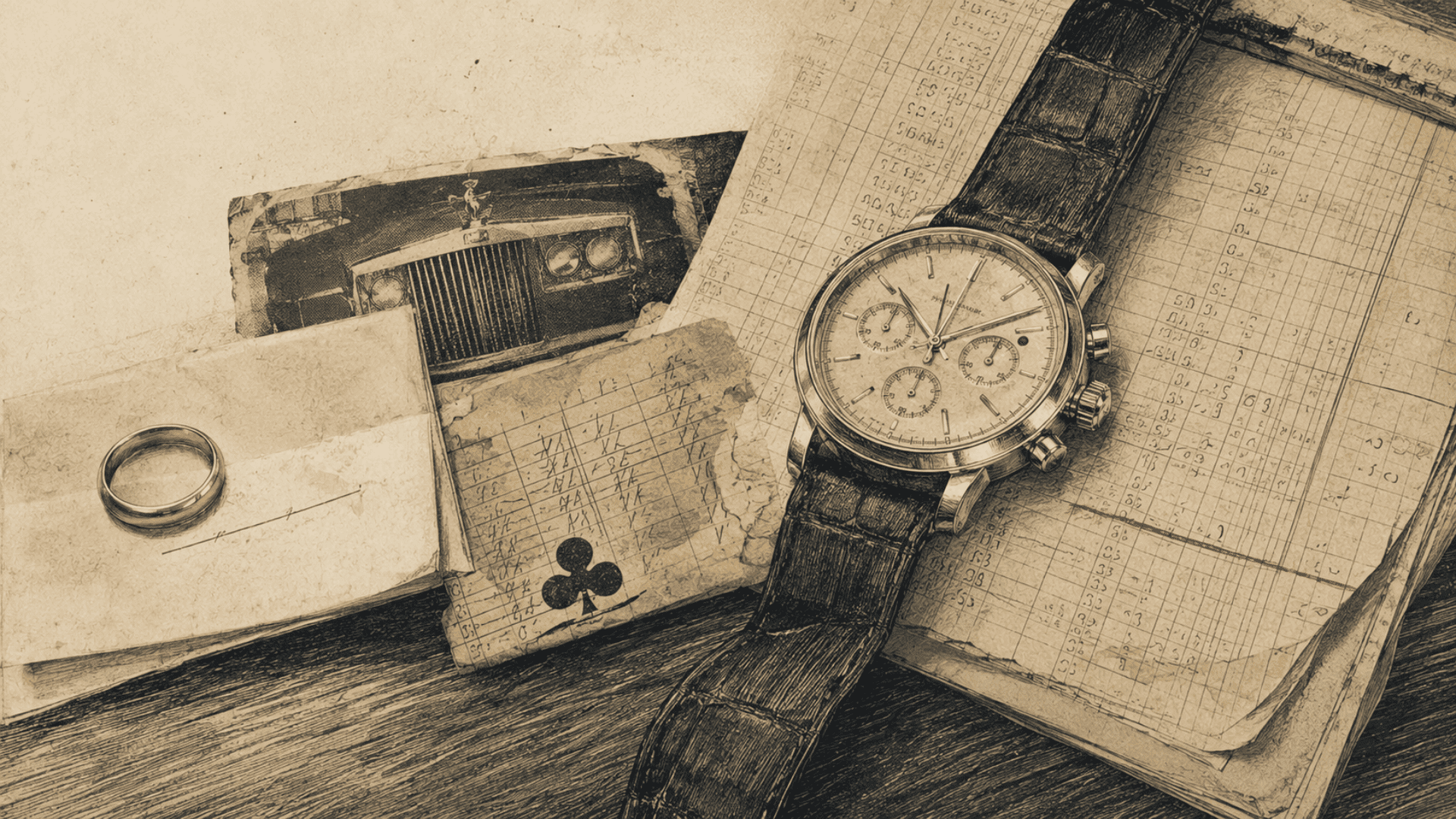
Finally, Beaty said, he had lied to the court itself. In August 2025, Goldstein had declared under penalty of perjury that he had no significant assets. He had not disclosed a watch that, according to a September 2024 estimate he had received, could be worth $90,000 to $100,000 after cooperation with the maker and repair. According to the Washingtonian, in 2022 alone he had spent approximately $220,000 on watches.
“You burned through money the second you had it in your accounts?” Beaty asked.
“No,” Goldstein said.
Beaty pulled up Government’s Exhibit 4. In November 2016, Goldstein received $9 million from Gores. He withdrew $6.3 million that same month. The account received $18.6 million in December and had $16.9 million in withdrawals. Those outflows included payments to other poker players. Beaty walked him through the transfers, one by one, the exhibit on the screen for the jury to see.
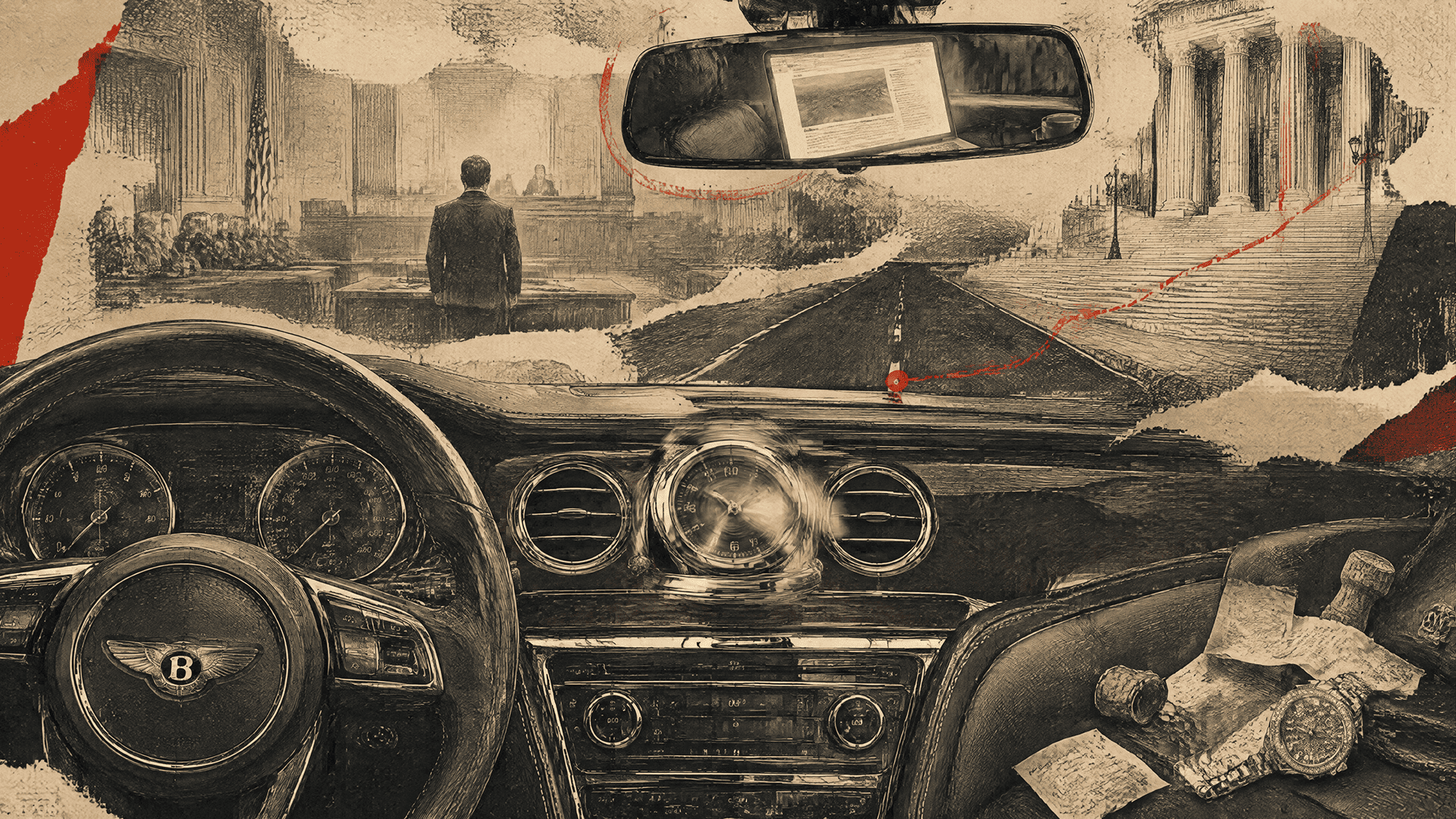
Beaty also questioned him about the spending itself, which didn’t seem to befit a man who liked to hole up alone in a hotel room before an argument. A $225,000 Bentley in 2017. A $17,000 trip to the St. Regis in Bali. Twelve thousand dollars at The Box nightclub. Another Bentley in 2020, this one $290,000.
“It was super important that your new Bentley had the special rotating clock?”
“It says that I want the rotating clock.”
“Everybody loves a rotating clock; right?”
“I don’t suppose everyone loves a rotating clock, no.”
The clock alone cost $8,000. Then The Box again. Forty-six thousand in May 2022. “Eight bottles of champagne, six bottles of tequila, 14 small bottles of water?” “I was hosting others,” Goldstein explained.
And again in August. Sixty thousand dollars. “Seven bottles of tequila, 15 bottles of glow-in-the-dark champagne, a bottle of vodka and ten large bottles of water?”
“Yeah.”
“They really get you on that $10 large bottle of water, don’t they?”
“Still hadn’t paid your taxes?”
“No. I won the money, so it’s in process.”
On redirect, Kravis tried to reframe the spending. Goldstein explained that his understanding of the law was that you could spend your money however you wanted while you owed back taxes, as long as you paid the penalties and interest. “Spend your money on something else, even if it is stupid, it is not a crime.”
* * *
In his closing argument, Beaty tried to keep it simple.
“It was a textbook tax evasion scheme, ladies and gentlemen,” he told the jury, “and Mr. Goldstein had executed that nearly flawlessly. But Alec Gores screwed up all Mr. Goldstein’s plans.”
Gores’s family office had reported the $26.4 million to the IRS on a Form 1099. Of all the men Goldstein beat, only Gores had filed the paperwork, and the number had been sitting in the government’s files ever since, waiting to be compared with what Goldstein declared.
Beaty walked them through the poker journal. He argued that Goldstein had used 23 minutes in October 2017 to add $3,070,000 in improper reductions, then passed the inflated figure to his accountant for the tax return. “Ladies and gentlemen, 23 minutes of work on the poker journal in October 2017 saved Mr. Goldstein more than $1.1 million in additional taxes on his gambling income. That wasn’t a mistake. That’s what tax evasion looks like.”
The prosecutor returned to the theme of intelligence. “How is it possible,” he asked, “that an attorney who can argue the most complex cases at the Supreme Court can’t understand his legal obligation to pay his taxes on time and not lie to the IRS?” He answered his own question. “Mr. Goldstein is probably the smartest person in this courtroom. Smart people generally don’t document their tax evasion. They hide their tax evasion in the tall grass. The crime here is the concealment.”
Goldstein wasn’t evading taxes to hoard wealth, Beaty argued. He was doing it to fuel a life he refused to give up. After the pulmonary embolism that nearly killed him in 2014, Goldstein had taken the motto YOLO, you only live once, to the extreme.
“Mr. Goldstein was putting off paying the IRS because he was YOLO-ing,” Beaty told the jury. “He wanted to keep gambling. He wanted to live like a high roller, and he was not willing to rein in his lifestyle whatsoever.”
Earlier in his argument, Beaty had told the jury: “He lied to everyone around him. He lied to those closest to him. He lied to the people he hired to help him. He lied to people when he wanted something from them. And now Mr. Goldstein wants something from this jury.”
Elsewhere in the argument, he said: “Ladies and gentlemen, Mr. Goldstein has been lying for so long that he doesn’t realize he was doing it anymore.”
Kravis delivered the defense closing, framing the prosecution as a misguided attempt to hold Goldstein accountable for his lifestyle choices. “This obsession with Mr. Goldstein’s life is pathetic,” he told the jury. Kravis accused the government of dwelling on affairs, spending, nightclubs and Bentleys, down to glow-in-the-dark champagne and ten-dollar bottles of water. The jury’s task, he said, was to decide whether Goldstein had willfully evaded taxes.
The defense attributed the unpaid taxes to confusion about accounting rules. Different backers owned different shares of sessions played in different years, complicating the calculation of Goldstein’s income. Goldstein had hired accountants and given them access to his records, Kravis argued. The size of a mistake did not make it a crime. On the mortgages, Kravis said, Goldstein’s only intent had been to hide the debts from his wife, not deceive the lenders.
“Tom Goldstein is innocent,” Kravis told the jury. “Tom Goldstein has suffered enough.”
Earlier in his testimony, asked what he enjoyed about no-limit hold’em, Goldstein had told the jury: “It’s the ability to essentially risk everything, to say I believe that I have the better position. I will put it all on the line.”
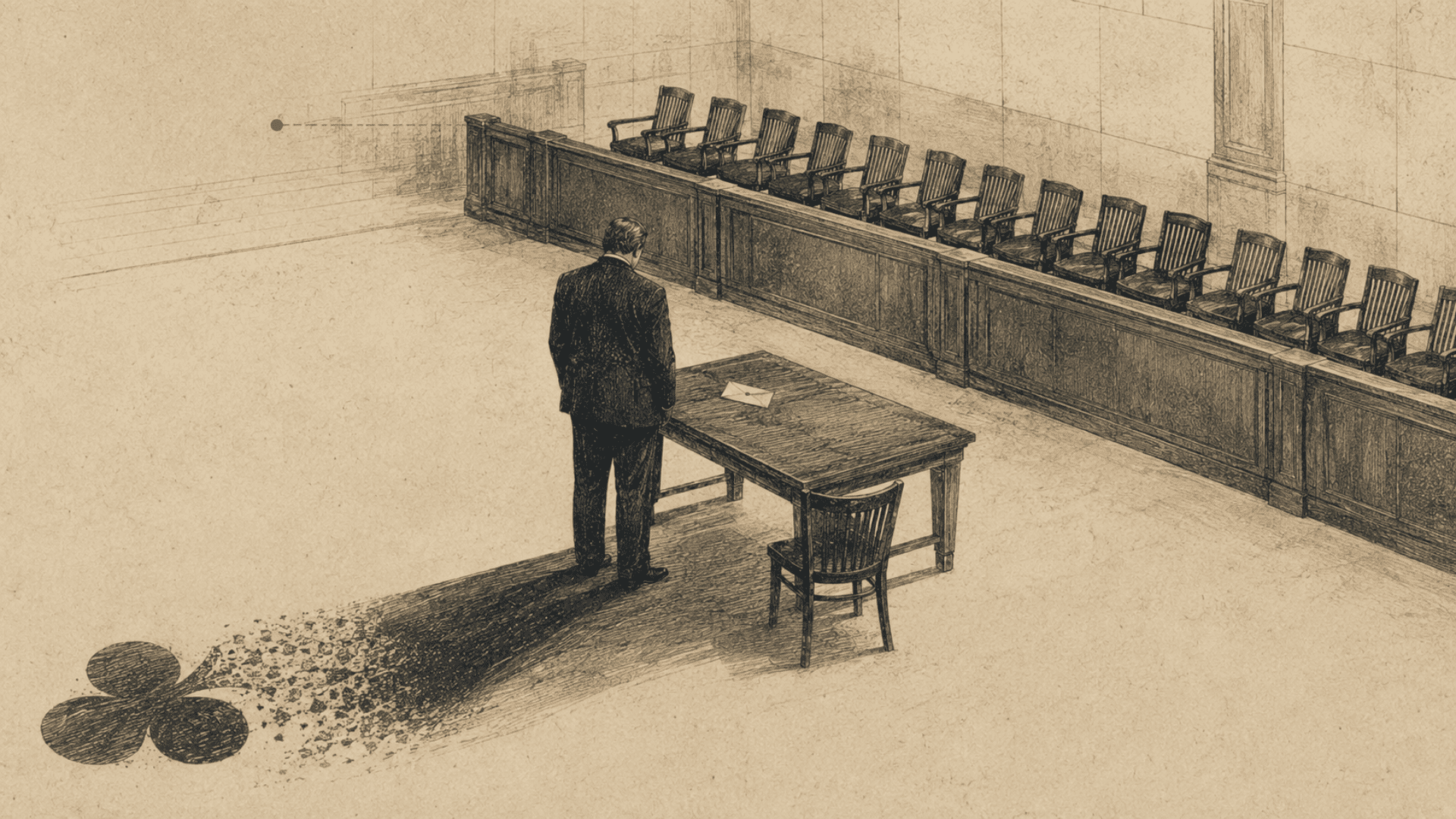
The jury deliberated for two and a half days. Late on the afternoon of Wednesday, February 25, 2026, the seven men and five women filed into the jury box. Goldstein stood at the defense table. He had remained composed throughout the trial and testified for a day and a half. One juror would later tell Law360 that his testimony was “a performance.” Now several jurors avoided looking at him.
The foreperson read the counts:
Guilty of tax evasion.
Guilty of aiding in the filing of false tax returns.
Guilty of willful failure to timely pay taxes.
Guilty of making false statements on a mortgage application.
In total, guilty on 12 of the 16 charges.
The jury acquitted him on four false-return charges: his personal returns for 2017, 2018 and 2019, and the firm’s return for 2018. The 2017 return reported no gambling income, although he had won $3.2 million from Safai and lost far more to him. For 2016, the year of the Gores winnings, the jury convicted him of tax evasion. That count centered on the poker journal.
* * *
On July 24, 2026, Goldstein returned to Greenbelt to be sentenced. The government sought ninety-seven months, just over eight years. His lawyers asked for no prison, citing gambling addiction. Judge Lydia Kay Griggsby sentenced him to seventy-two months, five years of supervised release and more than $3.1 million in restitution. Goldstein had rejected a plea offer that, he told the Times, would have meant roughly five years. His sentence was about a year longer than that account of the offer.
Then Griggsby revoked his bond. Goldstein was taken into custody from the defense table. On July 31, he filed an appeal, represented by a team that includes Elizabeth Prelogar, the former Solicitor General.
A divorce was pending by the spring of 2026, according to a filing in the case. Through the months of his release Goldstein had gone on living in the Washington house with Howe, who had been serving as his court-appointed custodian. After a decade in which he had lied to her, she was answerable to a federal judge for his compliance.
Ten months before the verdict, on April 23, 2025, Howe had announced the sale of SCOTUSblog to Dispatch Media. The announcement did not mention Goldstein by name.
The law firm they had started together as Goldstein & Howe also rebranded. After the indictment, the firm became known as Russell & Woofter. Neither of its founding partners remains.
One passage read to the jury stays with me. In conversations with Jeffrey Toobin for The New York Times Magazine in 2025, Goldstein had been talking about law and poker, explaining his approach to both.
“You have to figure out what your winning argument is,” he said. “It is a poker thing.”
Poker is about telling stories. Convincing the other player that you are weak when you’re really strong. It's about building a narrative that makes sense, over a single hand or many months of heads-up play, so that you can make your opponent see whatever you want them to see.
He continued: “And that is being willing to say, ‘This is not working.’”
With additional research from Owen Scheck
For background and source context, read our guide to Tom Goldstein, poker and the Supreme Court.
This is Chapter 11: The Verdict — the final instalment.
Missed an instalment along the way? Catch up on the full series here. Subscribe free for new stories from The Foundry.
Only new stories and instalments from The Foundry. No unrelated promotions. Unsubscribe any time.